

FRP Tanks for Sodium Hypochlorite Storage: What to Specify
A buyer's guide to specifying FRP tanks for sodium hypochlorite — resin and cure system, synthetic-veil corrosion barrier, UV protection, venting, and the ASTM standards to reference.
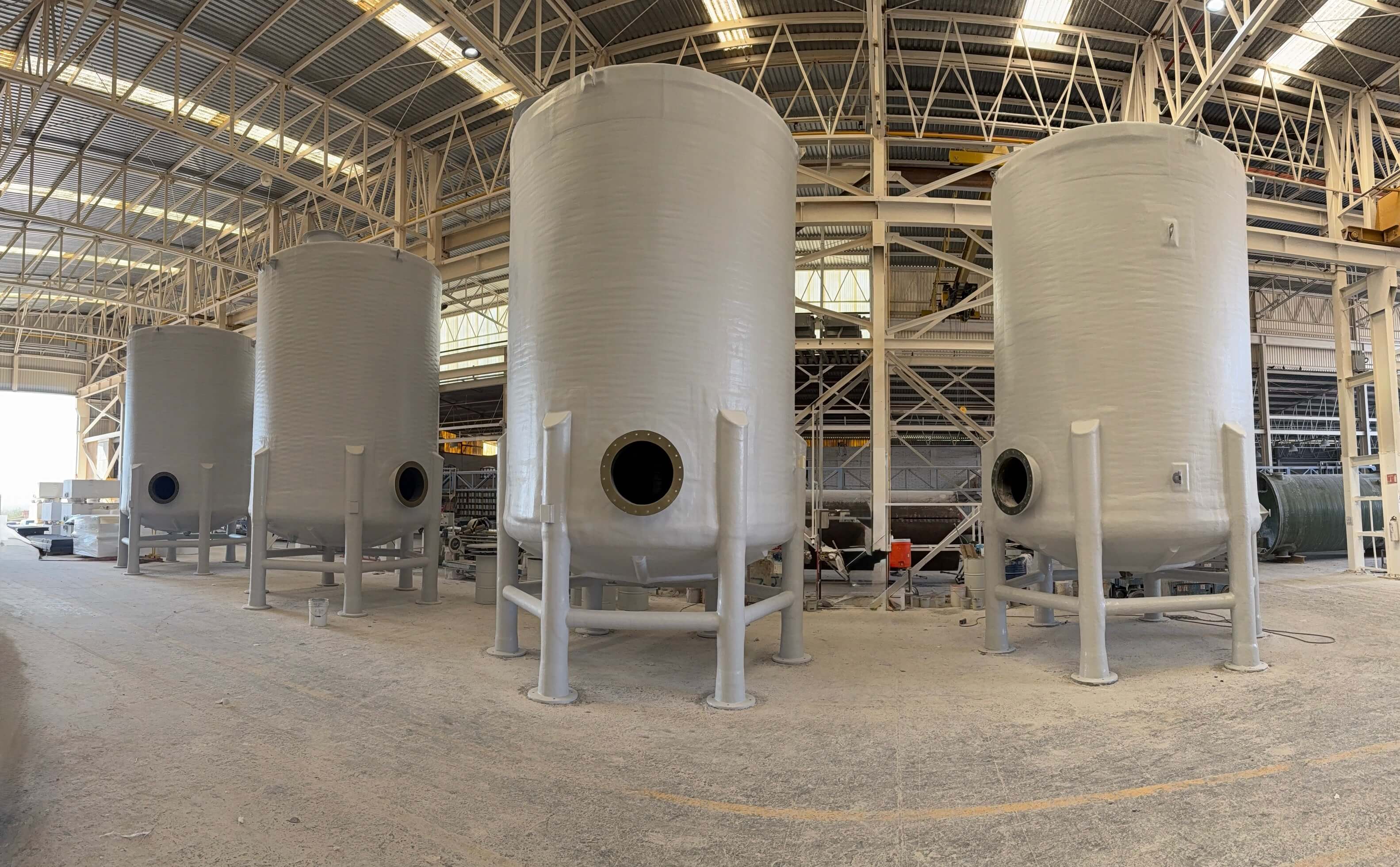
FRP Tanks for Sodium Hypochlorite Storage: What to Specify
Sodium hypochlorite is the most widely used disinfectant in municipal water and wastewater treatment, and a common oxidizer and bleaching agent in chemical processing and mining. It is also one of the more demanding chemicals to store. FRP tanks are a proven choice for hypochlorite service, but only when the tank is specified for an oxidizer, not simply copied from an acid-service datasheet.
Most FRP tanks that fail early in hypochlorite do not fail structurally. They fail from the inside: the corrosion barrier is slowly oxidized, glass fibers become exposed, and the chemical works its way toward the structural laminate. This guide explains why hypochlorite behaves differently from the acids we have covered in earlier articles, and what a buyer or specifier should put on the purchase order to get a tank that lasts.
Why Sodium Hypochlorite Is Different from Acid Service
Sulfuric and hydrochloric acid attack FRP mainly through permeation and hydrolysis. Sodium hypochlorite works differently, and three of its properties drive every design decision:
- It is an oxidizer. Hypochlorite attacks the resin matrix chemically, breaking down the polymer at the exposed surface. The attack is progressive: the inner surface softens, erodes and exposes the reinforcement beneath it.
- It is alkaline. Commercial solutions are strongly alkaline, and glass fibers are vulnerable to alkaline attack once the resin covering them is gone. Exposed glass wicks the chemical deeper into the laminate.
- It is unstable. Hypochlorite decomposes over time, and the rate increases with heat, sunlight and contamination by metal ions such as nickel, copper, cobalt and iron. Decomposition reduces product strength and releases oxygen gas.
That last point is easy to overlook. In hypochlorite service the tank must protect the chemical as much as it contains it. Metal fittings, the wrong cure system, or a translucent shell in direct sun can all accelerate decomposition, which costs the owner money in lost product strength even when the tank itself is sound.
Commercial sodium hypochlorite is typically delivered at 10–15% available chlorine by weight, with 12.5% being a common trade strength. On-site generation systems produce much weaker solutions, usually below 1%. Always specify the actual concentration you will store, not a generic "bleach" label.
Resin and Cure System: Where Hypochlorite Tanks Are Won or Lost
Premium epoxy vinyl ester resins are the usual choice for hypochlorite storage. Resin family alone is not enough, though. Two tanks built with the same vinyl ester can perform very differently depending on how the resin was cured.
- Cure system. Resin suppliers commonly recommend a benzoyl peroxide/dimethylaniline (BPO/DMA) cure for hypochlorite service instead of the conventional MEKP/cobalt system. Residual cobalt at the inner surface can catalyze hypochlorite decomposition, and an incompletely cured surface is more vulnerable to oxidation.
- Degree of cure. The inner surface must be fully cured before the tank enters service. Barcol hardness readings compared with the resin supplier's published minimum, and a surface tackiness check, are standard verifications. Post-cure should be applied where the resin supplier recommends it.
- Chemical resistance data. Ask for resistance data developed under ASTM C581 for sodium hypochlorite at your concentration and temperature. Generic "suitable for bleach" statements are not a substitute.
For a broader look at resin families, see our guide on how to select the right FRP resin system.
The Corrosion Barrier: Veil, Thickness and Glass Protection
Under ASTM D3299 (filament-wound tanks) and ASTM D4097 (contact-molded tanks), the laminate is built in layers: an inner surface reinforced with a surfacing veil, an interior layer of chopped strand mat, and the structural wall. The first two layers form the corrosion barrier. In most specifications the inner surface is roughly 10–20 mils thick, and the inner surface plus interior layer total at least 100 mils.
In hypochlorite service, the corrosion barrier deserves more attention than usual:
- Synthetic veil. Because hypochlorite attacks glass once the resin is gone, a synthetic (polyester) surfacing veil is commonly specified for the inner surface instead of a glass veil.
- Barrier thickness. Since the failure mode is gradual loss of the barrier, many specifiers call for a corrosion barrier thicker than the standard minimum. State the required thickness in mils on the purchase order rather than leaving it to "manufacturer's standard."
- Cut edges and penetrations. Nozzle cutouts, manway edges and secondary bonds are where glass is most likely to be exposed. Every cut edge in contact with the chemical should be sealed with the same resin-rich, veil-reinforced construction as the shell.
Sunlight, Temperature and Venting
Hypochlorite decomposes faster in sunlight and at elevated temperature. In the desert Southwest, an outdoor tank can see high shell temperatures during summer afternoons, so storage conditions matter as much as the laminate.
- UV protection. Specify a pigmented, UV-inhibited exterior surface so the shell is opaque. This protects both the chemical and the structural laminate from UV degradation.
- Temperature. Store hypochlorite at ambient temperature and out of direct sun where possible. Shade structures or insulation are worth evaluating for outdoor installations. The resin supplier's hypochlorite-specific temperature limit governs; it is lower than the general service limit of the same resin in other chemicals.
- Venting. Decomposition releases oxygen, so the vent must handle fill and withdrawal rates plus off-gassing. These are atmospheric tanks; they must never be pressurized. Vent, overflow and drain lines should be FRP or a compatible thermoplastic.
Fittings, Hardware and Liner Options
Metals are the most common source of trouble in hypochlorite systems. Carbon steel and standard stainless steels corrode in hypochlorite, and dissolved metal ions accelerate decomposition of the stored product.
- Nozzles and flanges. Specify FRP nozzles built with the full corrosion barrier, and gaskets confirmed compatible with hypochlorite by the gasket supplier.
- Bolting and supports. Keep all metal hardware external to the wetted area and protected from drips and spills.
- Instrumentation. Level transmitters, gauges and sample valves should have non-metallic wetted parts.
- Fluoropolymer dual laminate. Where the owner wants an extra margin, for example for high-value product or difficult inspection access, a thermoplastic liner bonded to the FRP structure is an option. ECTFE (continuous service −105 to 320°F, −76 to 160°C) is commonly evaluated for alkaline oxidizing service. Liner suitability should be confirmed with immersion data per ASTM D543.
What to Specify When Ordering
A complete request for quote for a hypochlorite tank should include:
- Chemical: sodium hypochlorite concentration (% available chlorine), pH, and any other components or contaminants.
- Operating conditions: minimum and maximum liquid temperature, indoor or outdoor location, and expected sun exposure.
- Capacity, dimensions, and fill and withdrawal rates.
- Fabrication standard: ASTM D3299 (filament-wound) or ASTM D4097 (contact-molded).
- Resin: premium vinyl ester with ASTM C581 data for hypochlorite, and the cure system to be used.
- Corrosion barrier: synthetic veil and minimum barrier thickness in mils.
- Exterior: pigmented, UV-inhibited surface.
- Nozzle schedule, manways, vent and overflow sizes, gasket material and bolting.
- Quality documentation: Barcol hardness records, visual inspection per the applicable standard, and water fill test.
Applicable ASTM Standards
- ASTM D3299 – Filament-wound fiberglass-reinforced thermoset-resin corrosion-resistant tanks. Covers laminate construction, corrosion barrier, and acceptance criteria.
- ASTM D4097 – Contact-molded glass-fiber-reinforced thermoset resin corrosion-resistant tanks. Used for hand lay-up and spray-up tanks and for heads, bottoms and fittings.
- ASTM C581 – Chemical resistance testing of thermosetting resins for liquid service. The basis for resin and cure system selection.
- ASTM D543 – Resistance of plastics to chemical reagents. Applicable when a thermoplastic liner is being evaluated.
Our Experience
We have been manufacturing FRP exclusively for more than 40 years, with over 2,600 projects delivered across water and wastewater, chemical processing and mining. We have built hypochlorite storage and day tanks in both filament-wound and contact-molded construction, and we have been applying fluoropolymer liners for more than 20 years. The pattern we see in the field is consistent: hypochlorite tanks that last are the ones where the cure system, veil and barrier thickness were specified up front, not left to a generic datasheet.
Final Thoughts
Sodium hypochlorite is not the most aggressive chemical an FRP tank will see, but it is one of the least forgiving of shortcuts. An oxidizing, alkaline and unstable product needs a properly cured vinyl ester, a synthetic-veil corrosion barrier of defined thickness, UV protection, and non-metallic wetted components. Get those right and FRP delivers long, low-maintenance service.
If you are planning a hypochlorite tank, send us your concentration, temperature range, capacity and any drawings or datasheets. Arizona FRP Supply will review the service conditions with you and recommend the right construction. Request a quote or write to sales@arizonafrpsupply.com.
References
ASTM International. (2022). Standard practice for determining chemical resistance of thermosetting resins used in glass-fiber-reinforced structures intended for liquid service (ASTM C581-22). ASTM International.
ASTM International. (2023). Standard specification for filament-wound fiberglass-reinforced thermoset-resin corrosion-resistant tanks (ASTM D3299-16(2023)). ASTM International.
ASTM International. (2022). Standard specification for contact-molded glass-fiber-reinforced thermoset resin corrosion-resistant tanks (ASTM D4097-17(2022)). ASTM International.
ASTM International. (2021). Standard practices for evaluating the resistance of plastics to chemical reagents (ASTM D543-21). ASTM International.
Explore Related FRP Products
-
FRP Tanks
Custom FRP tanks for chemical storage, wastewater treatment and industrial fluid handling. -
FRP Pipes
Corrosion-resistant FRP pipes for industrial piping systems.
Related Articles
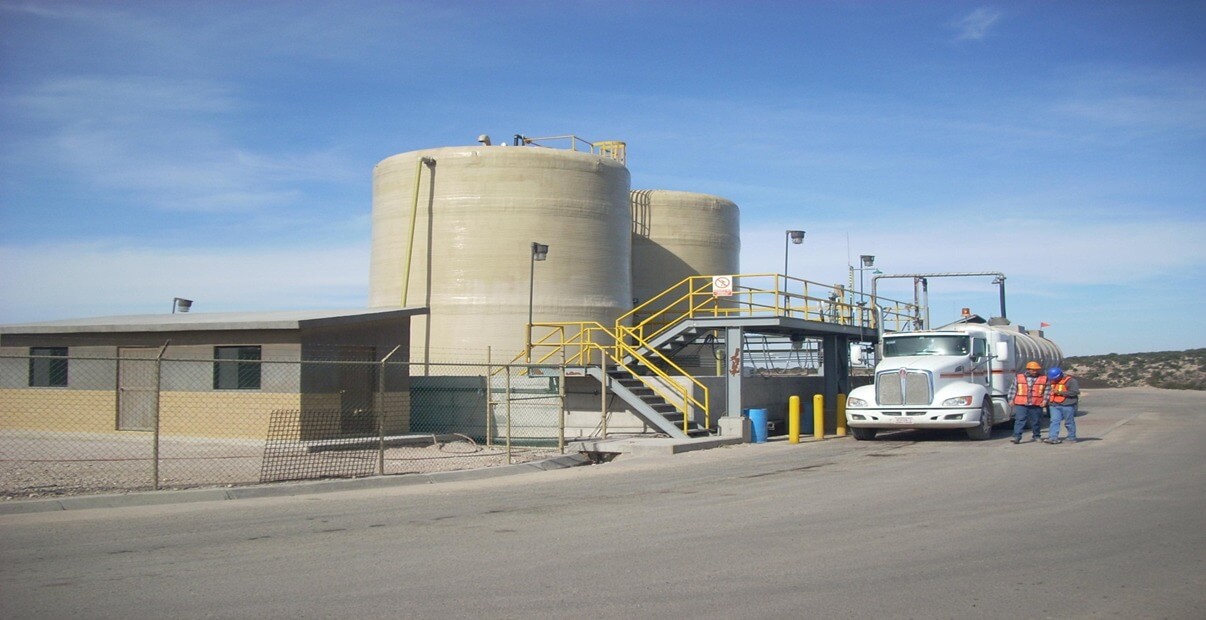
Purchase price is one line in a 25-year budget. Learn how to compare FRP and metals on lifecycle cost, which cost categories to model, and what to specify.
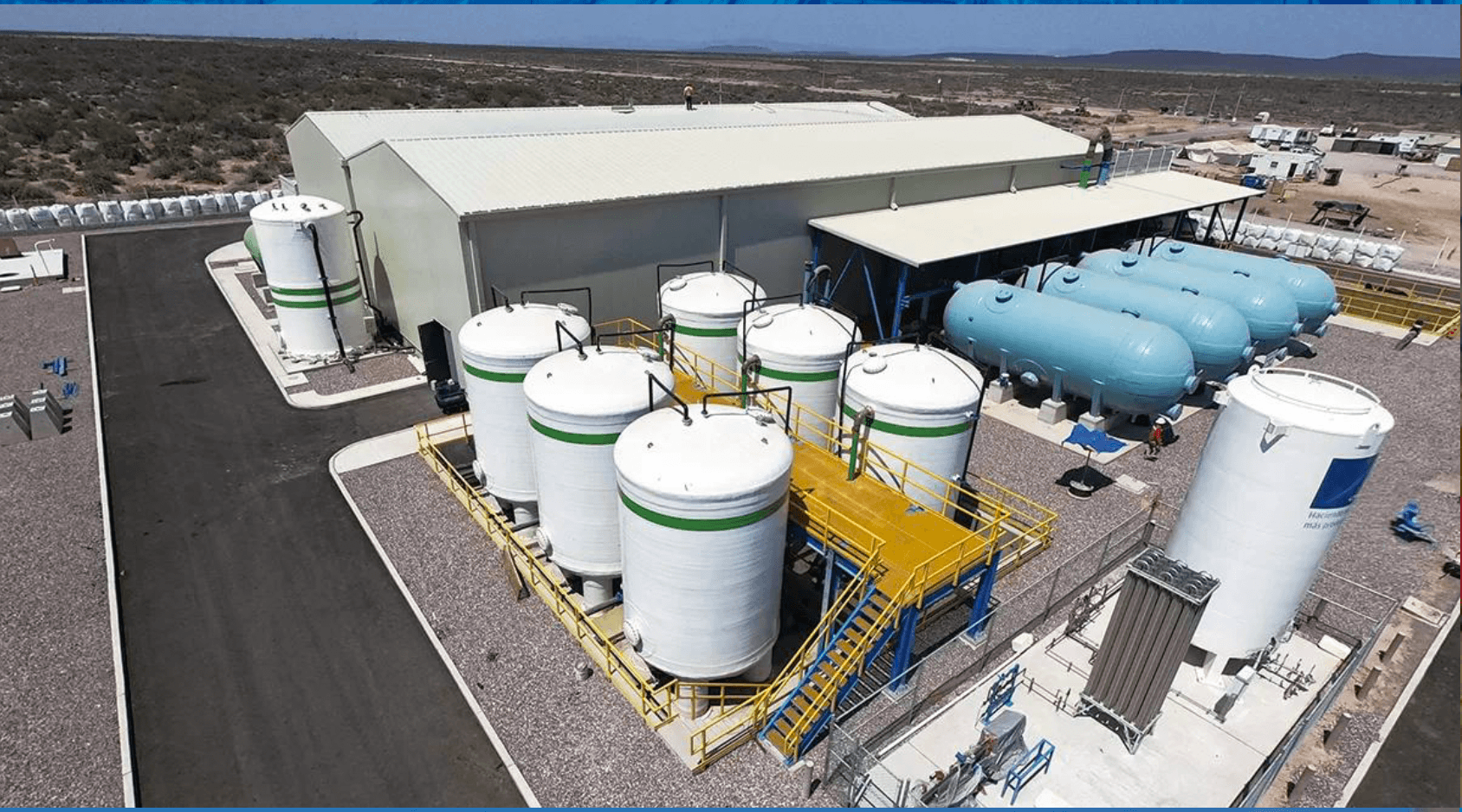
Carbon footprint is not one number per kilogram. Learn how to compare FRP and metal equipment across four life cycle stages and what to put in your specification.
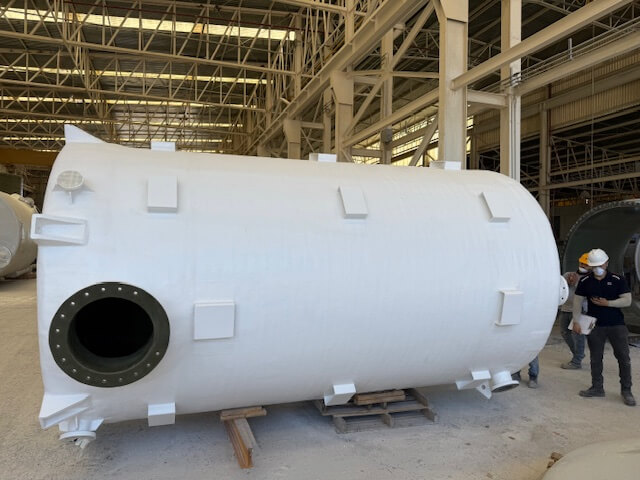
A buyer's guide to inspecting FRP tanks in corrosive service — external and internal checks, Barcol hardness baselines, inspection intervals, and the ASTM standards that define acceptance criteria.
Article Summary
A buyer's guide to specifying FRP tanks for sodium hypochlorite — resin and cure system, synthetic-veil corrosion barrier, UV protection, venting, and the ASTM standards to reference.
Need help with an FRP application?
Share your service conditions, chemical exposure, dimensions, or performance requirements and our team can help you evaluate the right FRP solution.
Request a Quote