

How to Select the Right FRP Resin System
A buyer's guide to choosing the right resin system for FRP tanks and piping — resin families, chemical resistance testing, temperature limits, and what to specify before you order.
How to Select the Right FRP Resin System
Every FRP tank or pipe is built from two materials working together: glass fiber reinforcement for structural strength, and a thermosetting resin matrix that binds the laminate and forms the corrosion barrier in contact with the process fluid. Of the two, resin selection is the decision that determines whether the vessel survives its service life or fails early. Reinforcement schedules and wall thickness can be adjusted through engineering; resin chemistry cannot be corrected after fabrication.
This guide walks through the resin families used in FRP tanks and piping, how chemical compatibility is actually verified, and what an engineer or buyer should specify before requesting a quote.
Why Resin Selection Comes Before Everything Else
Most FRP failures in chemical, mining, and water/wastewater service trace back to resin incompatibility with the process fluid, not a structural or reinforcement issue. A vessel can be filament-wound to the correct hoop strength and still fail in months if the resin barrier degrades under the specific chemical, concentration, and temperature it was never rated for. That is why resin selection has to happen first — fabrication method, laminate schedule, and liner requirements are all built around it, not the other way around.
The Resin Families Used in FRP Tanks and Piping
Commercial FRP construction relies on a small number of thermosetting resin families, each suited to a different range of chemical and temperature conditions:
- Isophthalic polyester resin: the entry-level resin for FRP construction. Adequate for mild service — dilute salts, water, and non-aggressive chemicals — but limited in resistance to strong acids, bases, and oxidizers.
- Vinyl ester resin: the workhorse resin for industrial FRP tanks and piping in mining, chemical processing, and water/wastewater applications. Its molecular structure has fewer ester linkages than polyester, which improves resistance to hydrolysis and a broad range of acids, caustics, and solvents.
- Novolac and brominated (fire-retardant) vinyl ester: used for elevated-temperature service and applications requiring flame resistance, at a higher material cost than standard vinyl ester.
Within each family, resin manufacturers publish chemical resistance guides that list specific compatible media, concentrations, and maximum service temperatures for that exact formulation. Those published limits — not general resin-family assumptions — are what should govern the final specification for a given application.
Chemical Compatibility: What ASTM C581 Actually Tests
ASTM C581 is the standard practice used to determine chemical resistance of thermosetting resins used in glass-fiber-reinforced structures intended for liquid service. It defines a protocol for immersing resin-and-glass laminate coupons in the target chemical at controlled concentration and temperature, then tracking changes in barcol hardness, flexural strength, and weight over an extended exposure period — typically six months or more for critical service.
When a resin supplier or fabricator states that a resin is "resistant" to a chemical, that claim should be traceable to C581 testing data, not a general resin-family reputation. For any application involving concentrated acids, strong caustics, or elevated temperature, ask for the specific chemical resistance guide covering that resin grade, concentration, and temperature — general polyester-vs-vinyl-ester comparisons are a starting point for narrowing options, not a substitute for verified data.
Temperature Limits and Service Conditions
Resin selection and temperature are inseparable. As service temperature rises, chemical attack accelerates and mechanical properties of the resin matrix soften — which is why the same resin rated for one chemical at ambient temperature may not be suitable for that same chemical at an elevated temperature.
As a general reference point, standard vinyl ester FRP construction is typically rated for continuous service in the range of approximately 180–200°F (82–93°C), depending on the specific resin grade and exposure medium. Applications running hotter, more concentrated, or more aggressive than that range typically require a higher-performance resin, a fluoropolymer liner, or both. Exact temperature and concentration limits should always be confirmed against the resin manufacturer's current chemical resistance guide for your specific fluid before finalizing a specification.
Fabrication Method Also Shapes Resin Selection
How the tank or pipe is built affects which resins are practical to use. Filament winding, covered under ASTM D3299, applies continuous glass fiber under controlled tension and resin content around a rotating mandrel — well suited to resins formulated for consistent viscosity and cure behavior under automated processing. Contact molding (hand lay-up), covered under ASTM D4097, applies resin and reinforcement manually and is typically used for large-diameter tanks, complex geometries, and field fabrication, where resin working time and manual wet-out characteristics matter more.
Both standards specify minimum resin content, laminate structure, and a resin-rich interior corrosion barrier layer — reinforcing that resin chemistry and fabrication method have to be specified together, not independently.
What to Specify When You Request a Quote
Before requesting pricing on an FRP tank or piping system, have the following information ready:
- The exact chemical(s) in contact with the interior surface, including concentration range and any mixture with other media
- Minimum, maximum, and continuous operating temperature — not just ambient design temperature
- Whether service is continuous or intermittent, and any expected temperature or concentration excursions
- Presence of abrasive solids, suspended particulates, or agitation that could affect the resin-rich liner
- Applicable fabrication standard (ASTM D3299 for filament-wound or ASTM D4097 for contact-molded) based on size and geometry
- Whether a fluoropolymer liner is required based on temperature or chemical severity beyond standard resin limits
Our Experience
We've built FRP tanks and piping exclusively for more than 40 years, with over 2,600 projects across mining, chemical processing, and water/wastewater service. Resin selection is the first engineering conversation on every quote we prepare — before wall thickness, before nozzle layout, before fabrication method — because getting that decision right is what determines whether a vessel lasts five years or twenty-five. For more than 20 years, we've also specified and applied fluoropolymer liners (PVDF, ECTFE, FEP, PFA) on projects where standard resin systems reach their chemical or temperature limits.
Final Thoughts
Resin selection is not a line item to fill in after the tank size is decided — it is the engineering decision that everything else in an FRP specification depends on. Isophthalic polyester, vinyl ester, and novolac vinyl ester each serve a different range of chemical and temperature conditions, and the right choice always comes back to verified chemical resistance data under ASTM C581, not a general resin-family assumption.
If you're specifying an FRP tank or pipe for a corrosive or high-temperature application, talk to us before you finalize the resin call. Contact Arizona FRP Supply with your chemical, concentration, and temperature data, and we'll help you match the right resin system — and fabrication method — to your service conditions.
References
ASTM International. (2022). Standard practice for determining chemical resistance of thermosetting resins used in glass-fiber-reinforced structures intended for liquid service (ASTM C581-22). ASTM International.
ASTM International. (2023). Standard specification for filament-wound fiberglass-reinforced thermoset-resin corrosion-resistant tanks (ASTM D3299-16(2023)). ASTM International.
ASTM International. (2022). Standard specification for contact-molded glass-fiber-reinforced thermoset resin corrosion-resistant tanks (ASTM D4097-17(2022)). ASTM International.
Explore Related FRP Products
-
FRP Tanks
Custom FRP tanks for chemical storage, wastewater treatment and industrial fluid handling. -
FRP Pipes
Corrosion-resistant FRP pipes for industrial piping systems.
Related Articles

A buyer's guide to inspecting FRP tanks in corrosive service — external and internal checks, Barcol hardness baselines, inspection intervals, and the ASTM standards that define acceptance criteria.
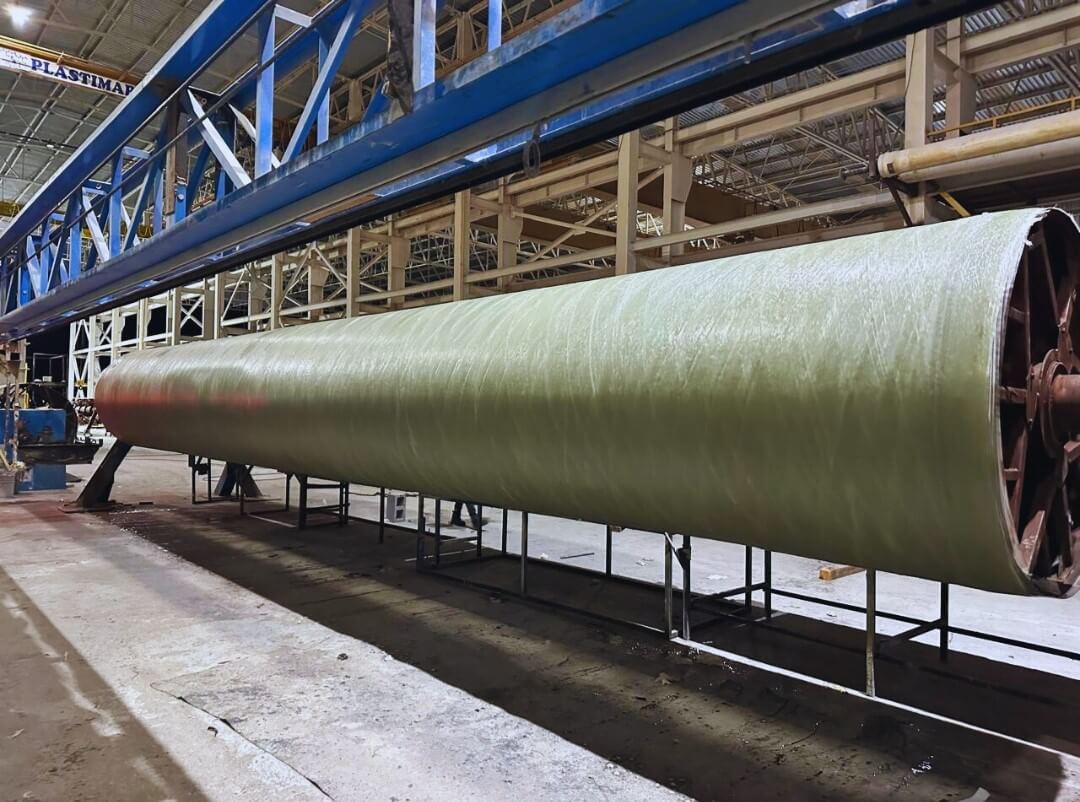
A buyer's guide to how FRP tanks are actually built — filament winding versus contact molding (hand lay-up) — and how each method affects structural performance, cost, and lead time.
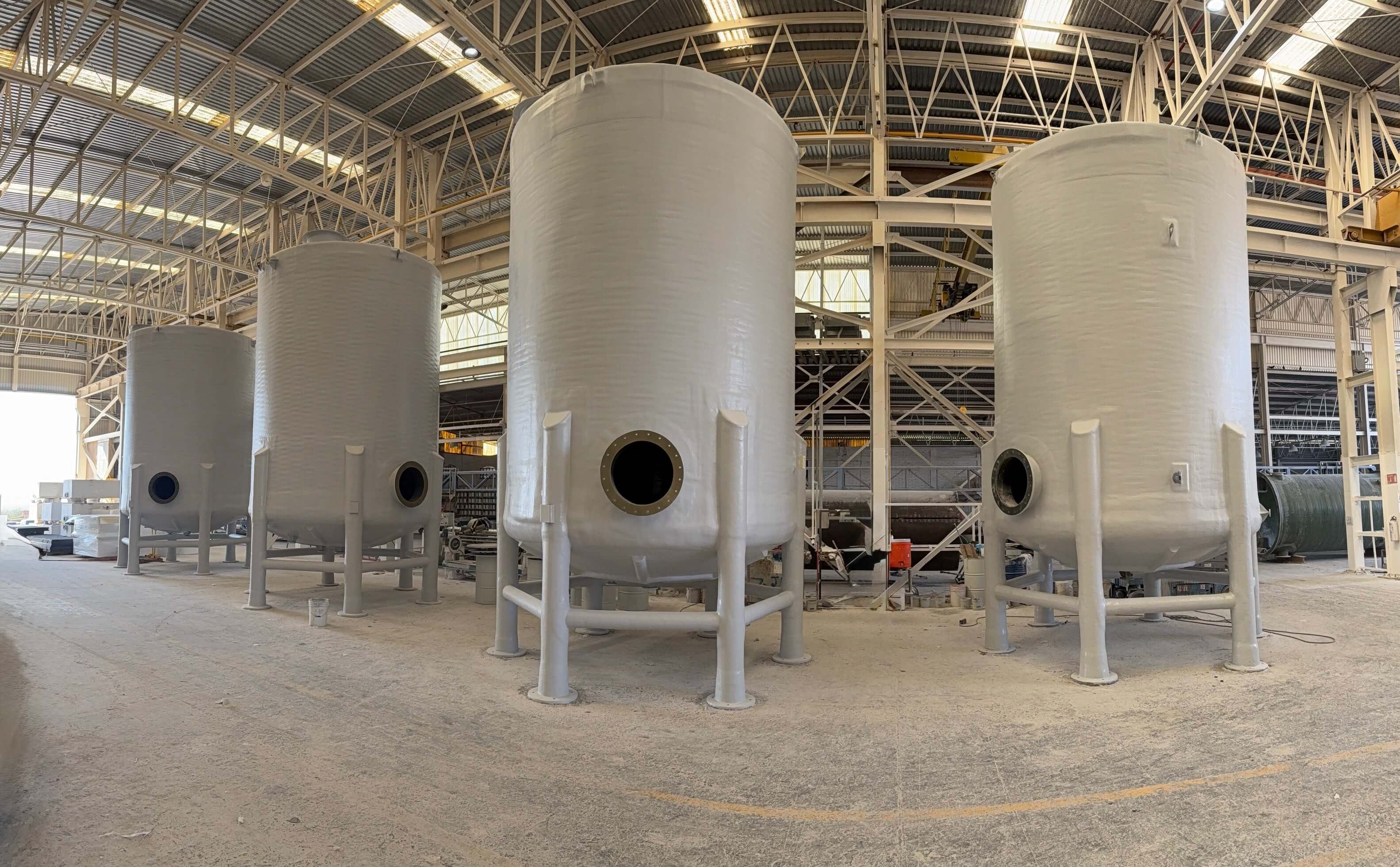
How to select FRP tanks and piping for hydrochloric acid service—resin systems, fluoropolymer liners, temperature limits, permeation, and the ASTM standards to specify.
Article Summary
A buyer's guide to choosing the right resin system for FRP tanks and piping — resin families, chemical resistance testing, temperature limits, and what to specify before you order.
Need help with an FRP application?
Share your service conditions, chemical exposure, dimensions, or performance requirements and our team can help you evaluate the right FRP solution.
Request a Quote