
What Is an FRP Spool?
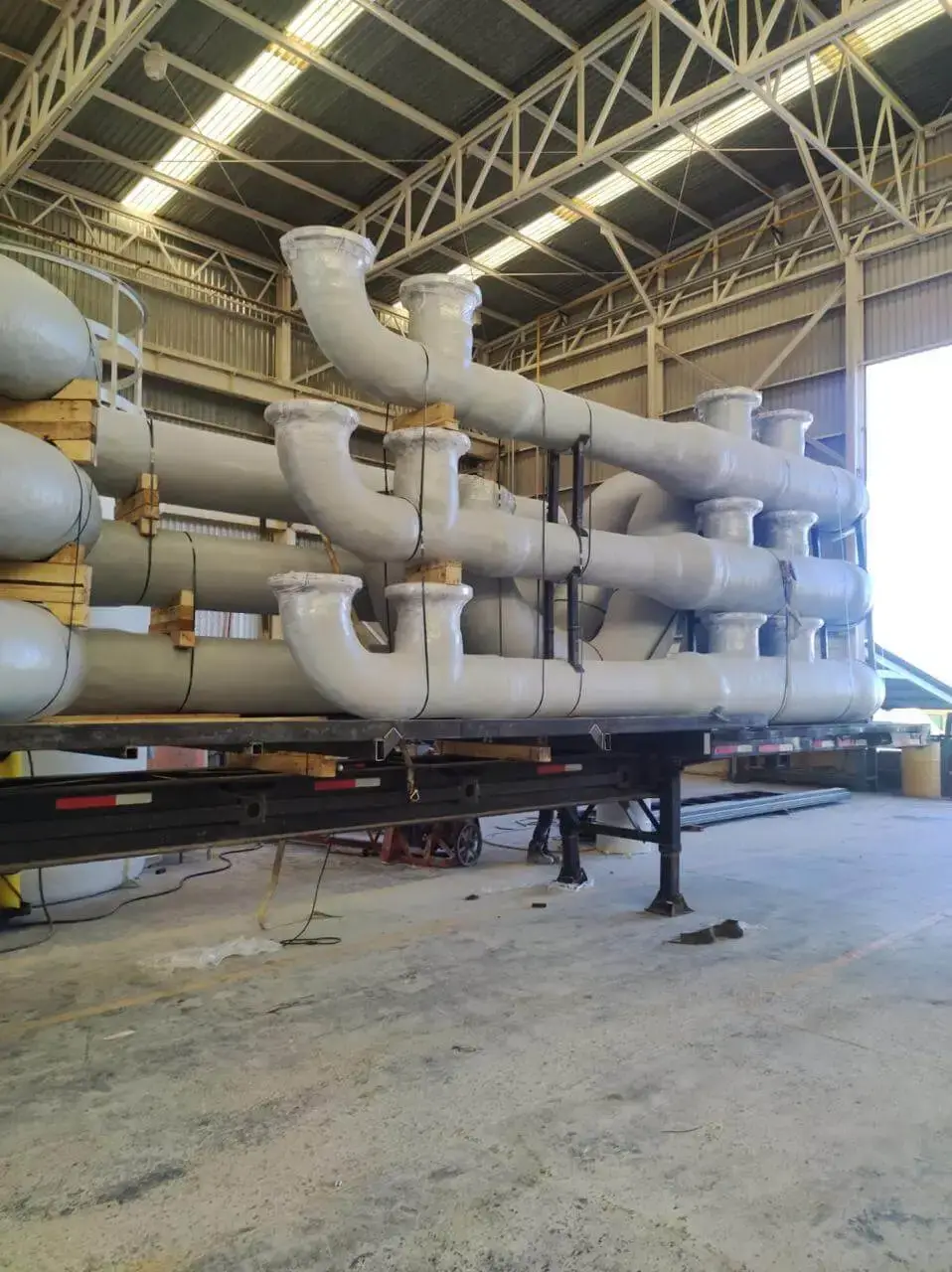
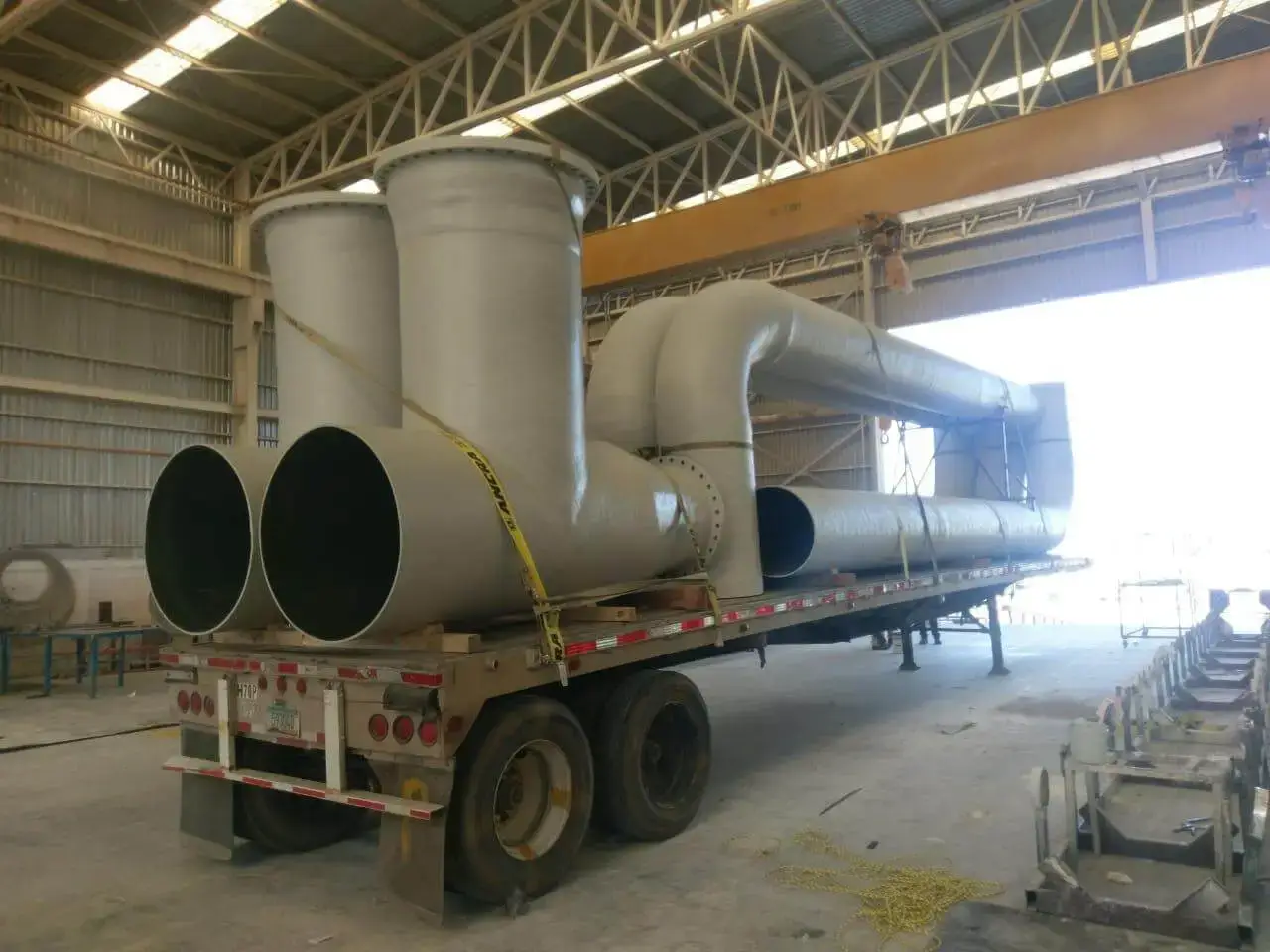
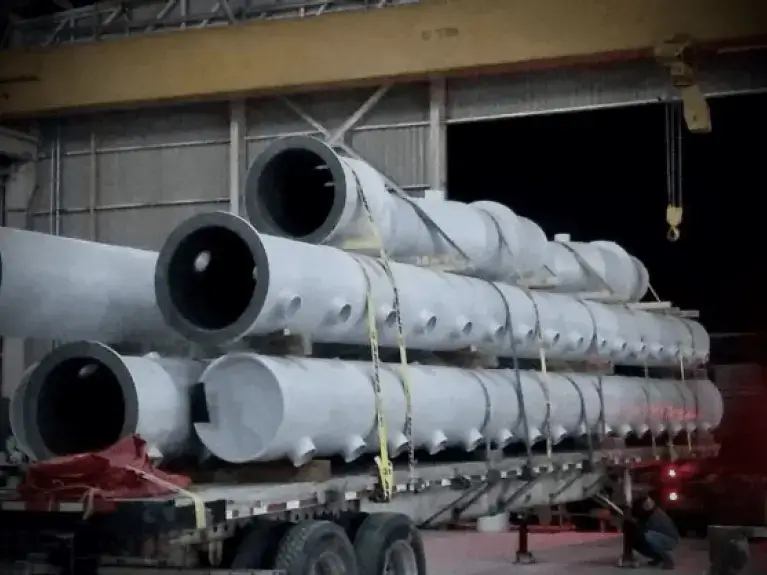
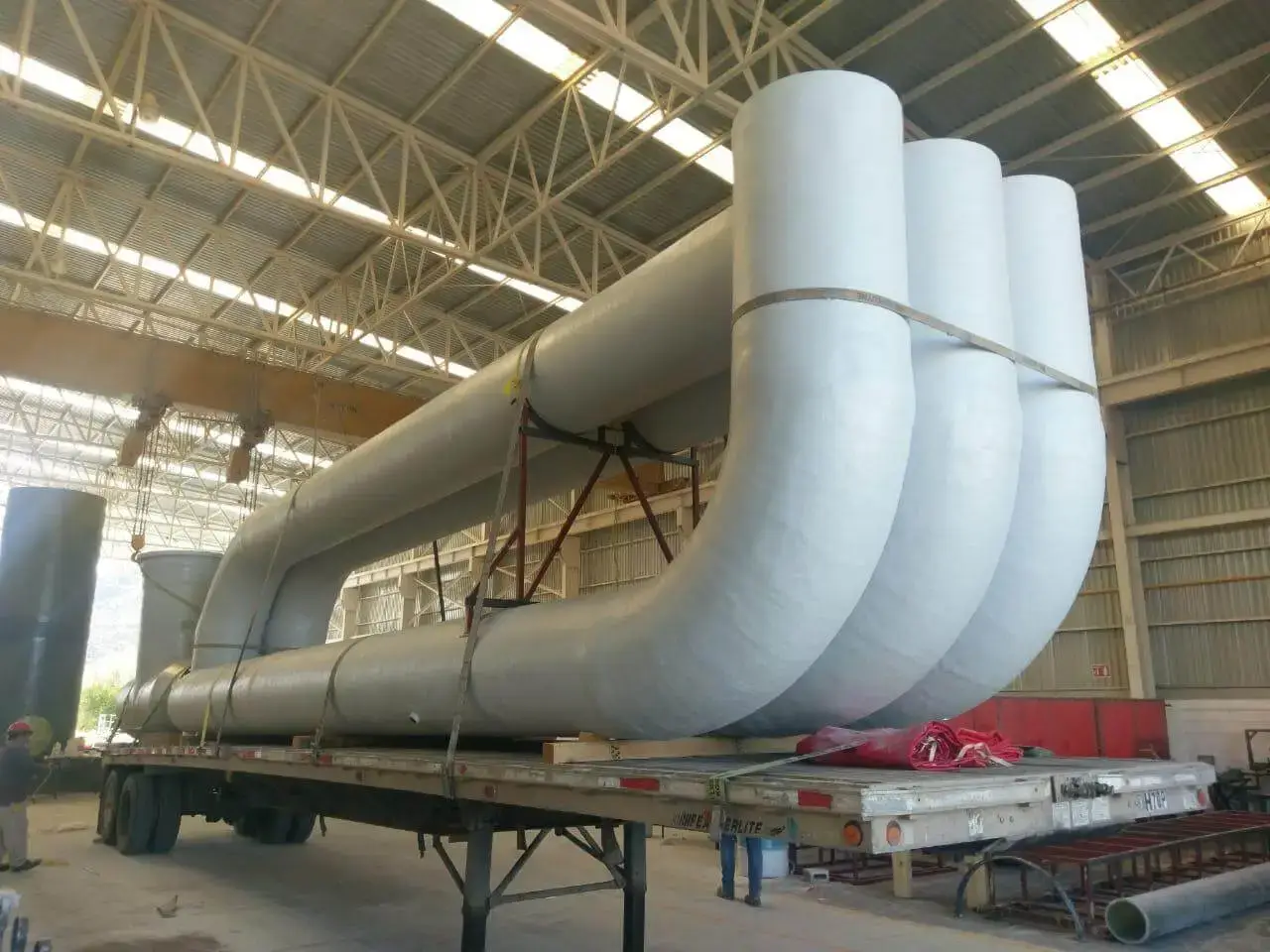
An FRP spool is a section of piping prefabricated in our shop. Pipe, fittings and flanges are joined and laminated according to your isometric drawings, then shipped ready to bolt in place.
Shop fabrication gives better control over joint quality than field work, and it cuts installation time on site.
Key Benefits of FRP Spools
Better Joints
Joints are laminated under controlled shop conditions instead of in the field.
Faster Installation
Spools arrive ready to bolt together, which means less field labor and downtime.
Corrosion Resistance
Vinyl ester resin systems are selected for your chemical service.
Built to Your Drawings
Each spool is tagged and dimensioned to match the isometrics.
Applications
- Process piping in chemical plants
- Electrolyte manifolds and distribution piping in copper electrowinning
- Acid and caustic transfer lines
- Water and wastewater treatment piping
- Scrubber recirculation piping
Manufacturing
Pipe is produced by filament winding. Fittings are made by filament winding or contact molding. Flanges are drilled to the bolt pattern your project requires (for example, ASME B16.5 Class 150). Every spool is checked for dimensions before shipping, and hydrostatic testing is available on request.
Standards
Pipe is manufactured in accordance with ASTM D2996, with pressure ratings based on ASTM D2992 test data. Resin selection follows chemical resistance data per ASTM C581.
Specify Your FRP Spools With Confidence
What to prepare for an accurate quote, and the technical guides our team has published.
What to Include in Your Quote Request
- Isometric drawings with spool breaks
- Chemical, concentration and temperature
- Design pressure and vacuum
- Flange rating and drilling standard
- Testing and documentation requirements
- Shipping destination
Technical Guides
-
FRP Piping for Corrosive Chemical Service: A Buyer's Guide
Pressure rating, corrosion barrier, joints, supports and applicable ASTM standards. -
How to Select the Right FRP Resin System
Isophthalic polyester, vinyl ester and novolac compared for tanks and pipes.
Product Gallery