

FRP vs Metal Tanks: 25-Year Total Cost of Ownership
Purchase price is one line in a 25-year budget. Learn how to compare FRP and metals on lifecycle cost, which cost categories to model, and what to specify.
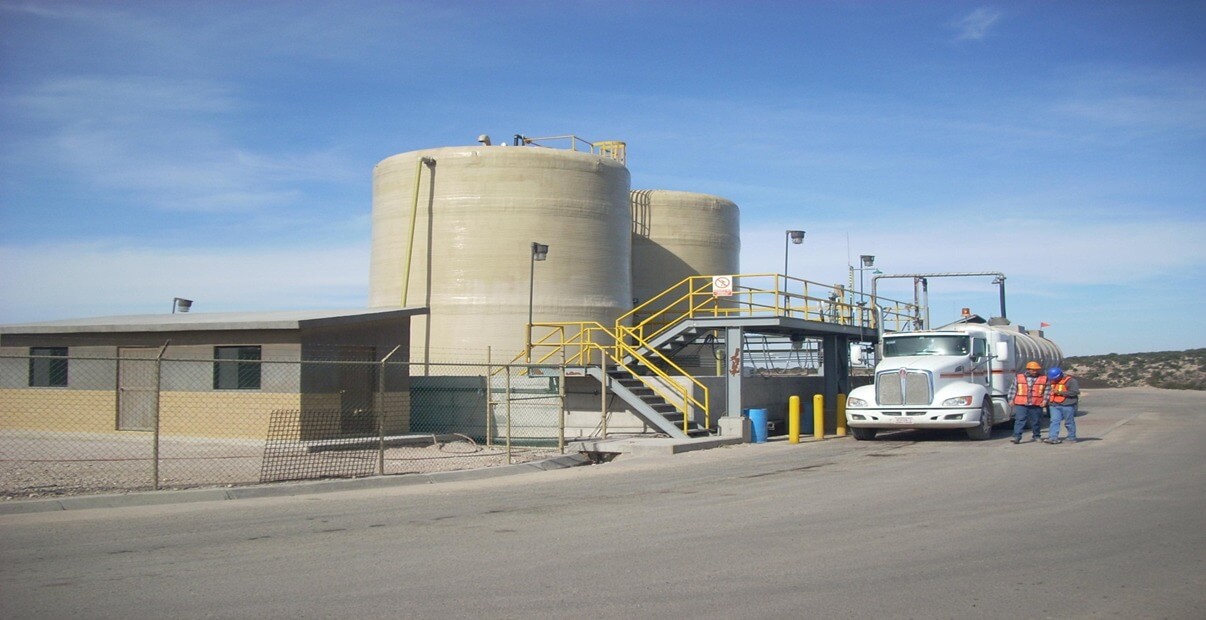
FRP vs Metal Tanks: 25-Year Total Cost of Ownership
When two quotes land on your desk, one for an FRP tank and one for a metal alternative, the comparison usually starts and ends with the purchase price. That is the wrong place to stop. A tank, a pipe run or a scrubber in corrosive service is not a one-time expense; it is an asset you will inspect, repair, shut down for and eventually replace. Over a 25-year horizon, the acquisition cost is often the smallest decision you make.
This guide explains how to build a total cost of ownership (TCO) comparison between fiberglass-reinforced plastic (FRP) and metals such as carbon steel, lined steel and stainless steel, which cost categories belong in the model, and which specification choices change the result.
Why purchase price misleads
Corrosive service punishes any material that depends on a sacrificial layer. Carbon steel depends on a coating or lining. Lined steel depends on the integrity of that lining, including every weld, nozzle and seam. Stainless steel depends on a passive oxide film that certain chemistries, chloride levels and temperatures can break down. In each case the initial price reflects a material that will need protection, monitoring or replacement later.
FRP works differently. The corrosion barrier is part of the laminate: a resin-rich inner layer designed for the specific chemistry, backed by a structural glass-reinforced wall. There is no coating to holiday-test every few years and no passive film to lose. That does not make FRP maintenance-free, but it moves the cost profile from recurring repair to periodic inspection.
The cost categories in a 25-year model
A credible TCO comparison puts every material on the same set of lines. Leaving one out almost always favors the option with the lower sticker price.
- Acquisition: equipment price, freight, duties and any required lining, coating or liner.
- Installation: foundations, lifting equipment, supports, field joints and commissioning. Lower unit weight usually reduces lifting and foundation effort.
- Inspection: internal and external inspections, thickness surveys, lining holiday testing and the labor to empty and access the vessel.
- Maintenance and repair: recoating, relining, weld repairs, gasket and nozzle replacement, and localized laminate repairs for FRP.
- Downtime: lost production while the asset is out of service. In continuous plants this line frequently outweighs every other maintenance cost.
- Replacement: the cost and timing of a new asset if the service life is shorter than the horizon, including removal and disposal of the old one.
- Residual value: scrap or salvage at the end of the horizon, which is usually small compared with the rest.
The TCO formula
Discounting future costs to present value keeps the comparison honest, because a repair in year 15 does not weigh the same as a payment today:
TCO = C0 + the sum over years t = 1 to 25 of [(Cm + Ci + Cd) / (1 + r)^t] + Cr − S
- C0: initial installed cost (equipment plus installation).
- Cm, Ci, Cd: maintenance, inspection and downtime cost in year t.
- r: your company's discount rate.
- Cr: discounted replacement cost, if any occurs inside the horizon.
- S: discounted residual value.
The structure matters more than any single input. Run it in a spreadsheet with your own plant's numbers, and test the result with a conservative and an aggressive case for each material.
Variables that swing the result
Four service conditions decide whether FRP wins the comparison, and by how much.
- Chemistry and concentration: FRP resin selection is driven by the chemical. Resin chemical resistance is evaluated under ASTM C581, and the correct resin family for sulfuric acid, hydrochloric acid, hypochlorite or caustic is not the same. Specifying the wrong resin is the fastest way to destroy an FRP advantage.
- Temperature: standard vinyl ester FRP is suited to continuous service of roughly 180–200°F (82–93°C). Above that range, a fluoropolymer-lined design or a different material may be the right answer, and the TCO model should reflect it.
- Abrasion and solids: slurries and solids-laden flows can erode any wall. A thicker corrosion barrier or a wear layer changes both price and life.
- Thermal cycling and mechanical loads: frequent heat-up and cool-down cycles, vacuum service and external loads must be addressed in the structural design.
When the service is within FRP's envelope, the metal alternative typically carries more recurring cost lines. When the service sits at the edge of the envelope, a lined or exotic metal alloy option may still be justified, and the TCO model is how you prove it either way.
How to read the supplier's numbers
Ask every bidder for the same three inputs: the expected inspection interval, the expected repair scope at each interval, and the service life they will warranty for your stated chemistry and temperature. Then ask for reference installations in comparable service. A supplier who cannot describe maintenance in concrete terms probably has not modeled it, and neither can you. Put those answers directly into the Cm, Ci and Cd terms above rather than relying on generic industry averages.
What to specify when ordering
A TCO advantage only materializes if the equipment is built to a defined standard. At a minimum, your purchase specification should state:
- The governing construction standard: ASTM D3299 for filament-wound tanks or ASTM D4097 for contact-molded tanks in atmospheric service.
- The full chemical list with concentrations, including upset and cleaning conditions, plus minimum and maximum operating temperature.
- The resin system and corrosion-barrier construction, backed by chemical resistance data per ASTM C581.
- Design conditions: specific gravity, vacuum or pressure rating, wind and seismic loads, and nozzle loads.
- Inspection and acceptance criteria, including documentation of the cure and the laminate construction.
- Warranty terms and the service life the supplier is willing to stand behind in writing.
Note that tanks are specified to ASTM D3299 or D4097 as atmospheric vessels; do not carry pressure-vessel requirements into an atmospheric tank specification unless the design actually calls for them.
Applicable ASTM standards
- ASTM D3299: filament-wound fiberglass-reinforced thermoset-resin corrosion-resistant tanks.
- ASTM D4097: contact-molded glass-fiber-reinforced thermoset resin corrosion-resistant tanks.
- ASTM C581: determining chemical resistance of thermosetting resins used in glass-fiber-reinforced structures intended for liquid service.
Our Experience
We have spent more than 40 years manufacturing FRP exclusively, across more than 2,600 projects in mining, chemical processing and water and wastewater. The pattern we see in the field is consistent: the projects that look best on a five-year view are the ones where the owner defined the chemistry, temperature and standard up front, and priced inspection and downtime into the decision. The projects that disappoint are almost always the ones where the specification was vague and the lowest quote won.
Final Thoughts
Comparing FRP and metals on purchase price alone hides the costs that accumulate every year after commissioning. Build the 25-year model, include downtime, discount the future cash flows and test your assumptions. If the service fits FRP, the numbers usually make the case on their own.
Planning a tank, piping or scrubber project and want a lifecycle comparison for your service conditions? Contact Arizona FRP Supply with your chemical list, temperatures and volumes, and we will help you specify the right FRP solution and quote it on a like-for-like basis.
References
ASTM International. (2022). Standard practice for determining chemical resistance of thermosetting resins used in glass-fiber-reinforced structures intended for liquid service (ASTM C581-22). ASTM International.
ASTM International. (2023). Standard specification for filament-wound fiberglass-reinforced thermoset-resin corrosion-resistant tanks (ASTM D3299-16(2023)). ASTM International.
ASTM International. (2022). Standard specification for contact-molded glass-fiber-reinforced thermoset resin corrosion-resistant tanks (ASTM D4097-17(2022)). ASTM International.
Explore Related FRP Products
-
FRP Tanks
Custom FRP tanks for chemical storage, wastewater treatment and industrial fluid handling. -
FRP Pipes
Corrosion-resistant FRP pipes for industrial piping systems.
Related Articles
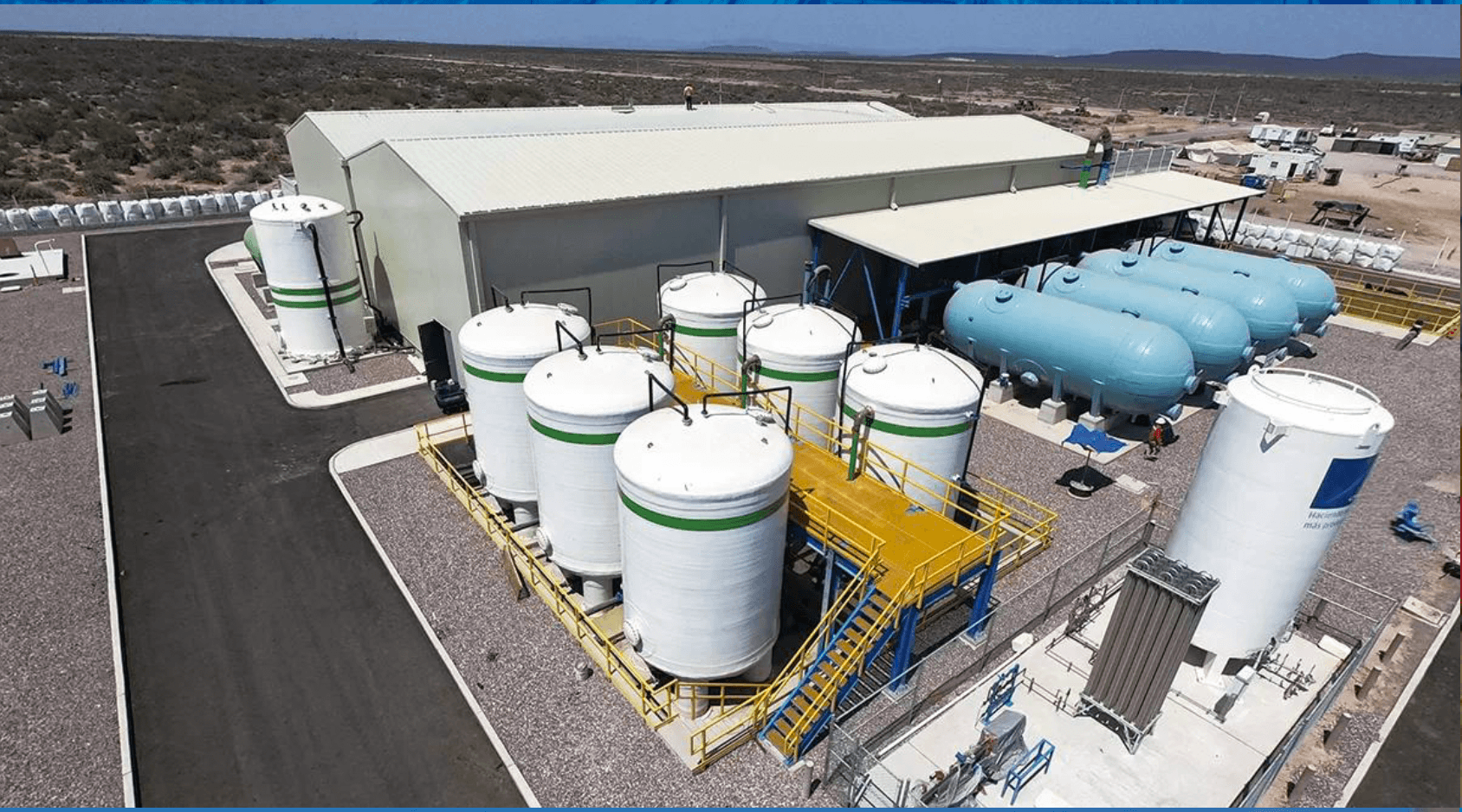
Carbon footprint is not one number per kilogram. Learn how to compare FRP and metal equipment across four life cycle stages and what to put in your specification.
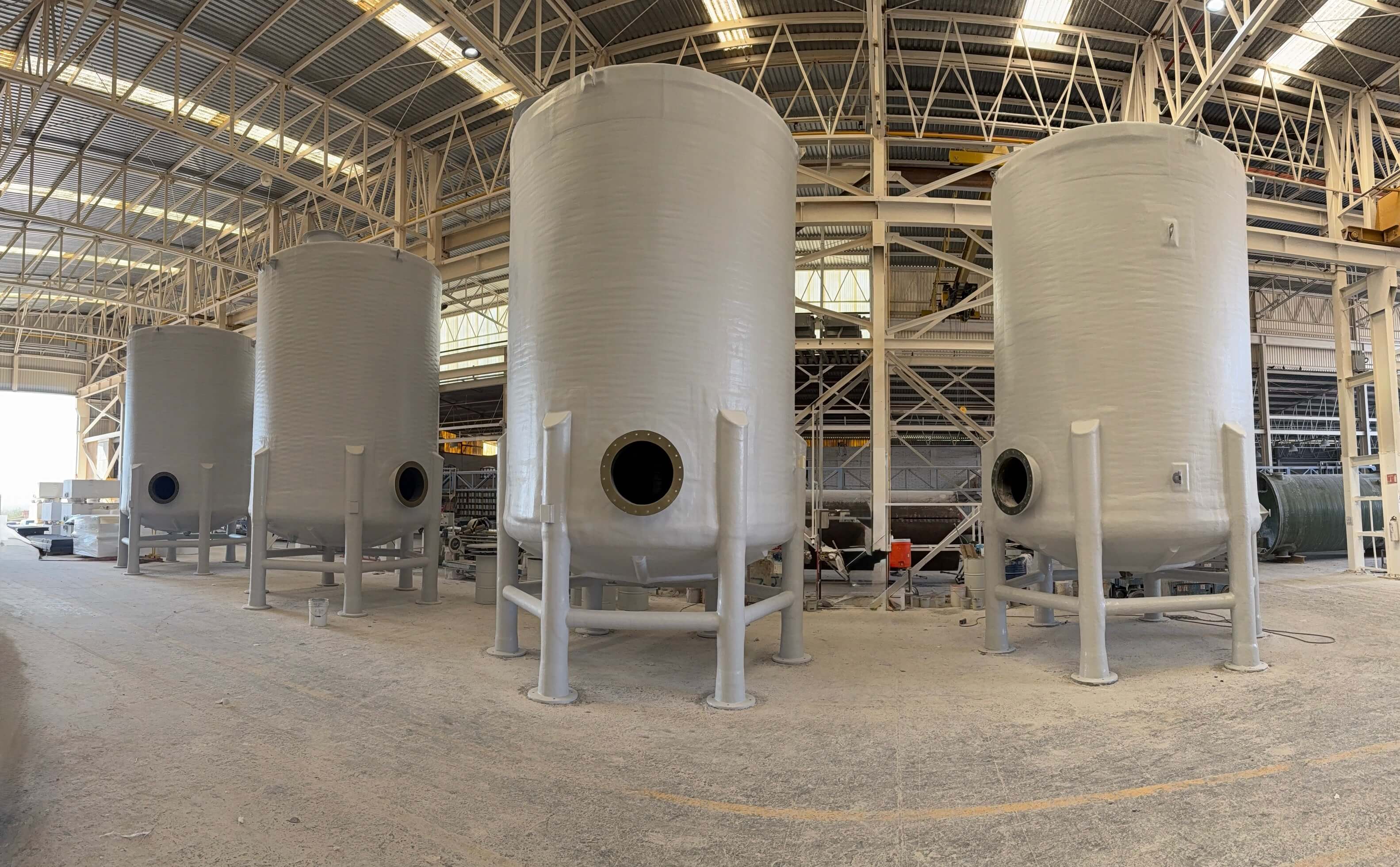
A buyer's guide to specifying FRP tanks for sodium hypochlorite — resin and cure system, synthetic-veil corrosion barrier, UV protection, venting, and the ASTM standards to reference.
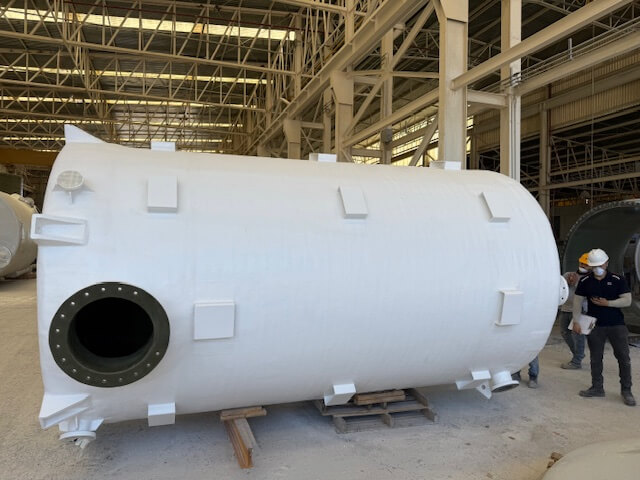
A buyer's guide to inspecting FRP tanks in corrosive service — external and internal checks, Barcol hardness baselines, inspection intervals, and the ASTM standards that define acceptance criteria.
Article Summary
Purchase price is one line in a 25-year budget. Learn how to compare FRP and metals on lifecycle cost, which cost categories to model, and what to specify.
Need help with an FRP application?
Share your service conditions, chemical exposure, dimensions, or performance requirements and our team can help you evaluate the right FRP solution.
Request a Quote