

Hydrochloric Acid (HCl): FRP Materials Selection Guide
How to select FRP tanks and piping for hydrochloric acid service—resin systems, fluoropolymer liners, temperature limits, permeation, and the ASTM standards to specify.
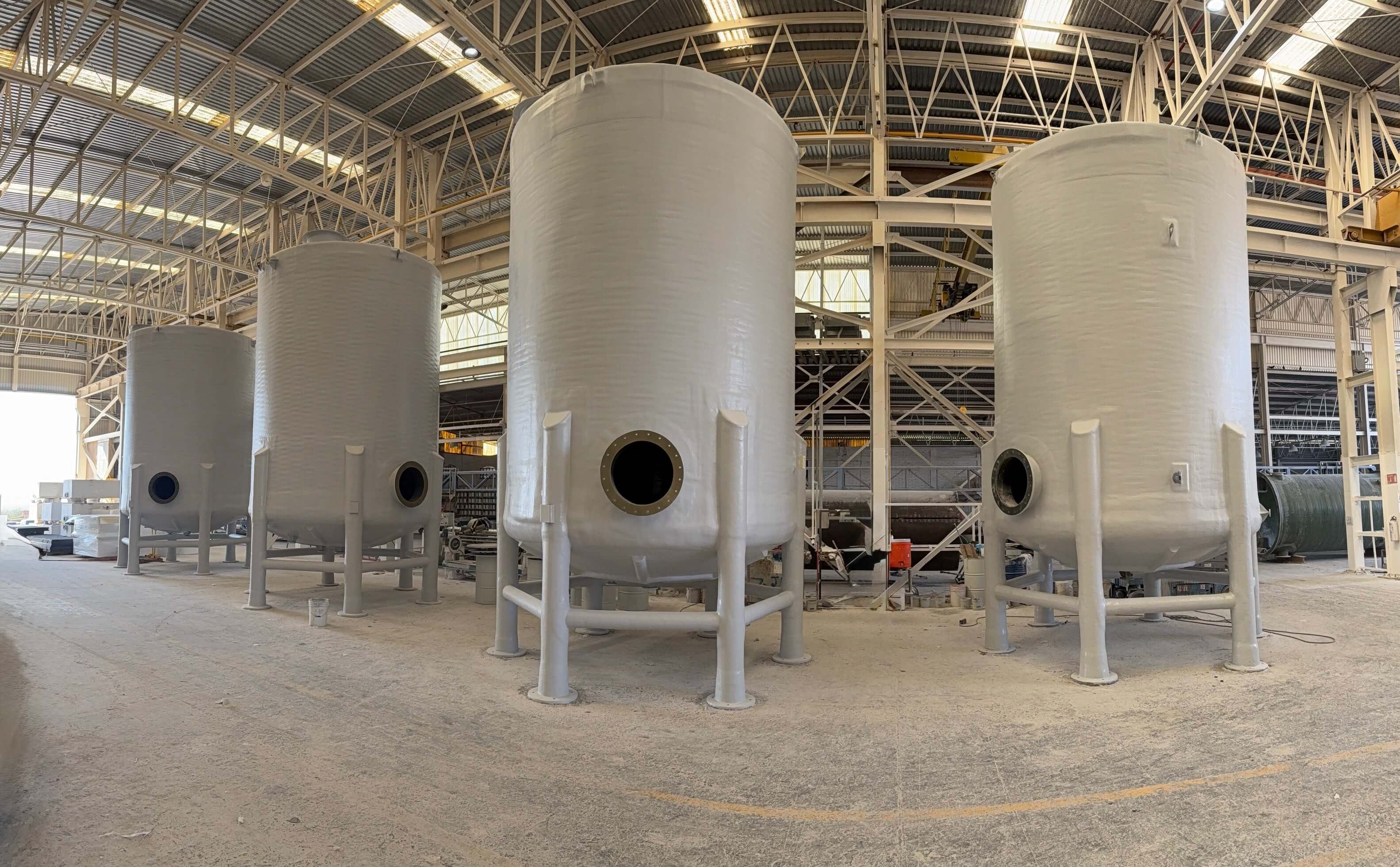
Hydrochloric Acid (HCl): An FRP Materials Selection Guide
Hydrochloric acid is one of the toughest chemicals you can ask a tank or pipe to contain. It is a strong, non-oxidizing acid, it is mobile, and its chloride ion is brutal on metals. If you are storing or moving HCl in mining, chemical processing, water treatment, or steel pickling, the material you specify is the single biggest factor in how long the equipment lasts and how often it shows up on your maintenance budget. This guide walks a buyer or specifier through why fiber-reinforced plastic (FRP) is so widely used for HCl, what actually drives the selection, and what to put on your purchase specification so you get the right tank the first time.
Why HCl Punishes the Wrong Material
Two things make hydrochloric acid difficult. First, it is highly corrosive across its full commercial concentration range, which runs up to roughly 37% as supplied. Second, the chloride ion attacks the passive oxide layers that protect stainless steels, so the very mechanism that makes stainless "stainless" stops working in HCl service. The result is rapid general corrosion, pitting, and chloride stress-corrosion cracking. On top of the liquid problem, the vapor space above stored HCl is loaded with corrosive fumes, so any material you choose has to survive both immersion and the vapor phase.
This is why HCl service forces a real materials decision rather than a default one. The wrong choice does not fail slowly and politely; it fails with thinning walls, leaks at welds, and unplanned shutdowns.
Where Metals Struggle With Hydrochloric Acid
Common stainless grades such as 304 and 316 are generally not suitable for hydrochloric acid because of chloride attack. Carbon steel is attacked directly. The metallic options that do resist HCl tend to be exotic metal alloys or rubber-lined and brick-lined steel—solutions that carry high capital cost, longer lead times, and ongoing inspection of the lining. For most atmospheric storage and process duties, those metals are over-engineered and over-priced for the job.
FRP changes the math. A fiberglass laminate does not rely on a passive film, so chlorides do not undermine it the way they undermine stainless. The corrosion resistance is built into the resin matrix, and the structural strength is carried by the glass reinforcement behind a dedicated corrosion barrier. You get a non-metallic system that handles HCl without the price tag of exotic alloys.
Choosing the FRP Corrosion Barrier: Resin Does the Work
In an FRP tank, the glass gives you strength but the resin gives you chemical resistance—so for HCl, the resin system is the decision that matters most. The corrosion barrier is the inner region of the laminate that actually contacts the acid: a resin-rich inner surface reinforced with a synthetic veil, followed by a chemically resistant layer. For hydrochloric acid, vinyl ester resins are the workhorse, with higher-crosslink (novolac) vinyl esters used where temperatures climb.
The key point for a buyer is this: do not accept a resin recommendation on faith. Ask your supplier for the resin manufacturer's chemical-resistance data for your specific HCl concentration and operating temperature, generated under the method in ASTM C581. That data—not a sales claim—is what tells you whether a resin will hold up at your conditions. Standard FRP vinyl ester construction is generally rated for continuous service around 180–200°F (82–93°C); above that, or where the chemistry is more demanding, you move to a more resistant resin or a lined system.
A few practical specification points for the barrier:
- Specify the corrosion barrier (veil plus chemically resistant layer) built to the sequence and thickness described in ASTM D3299 or D4097, not just a structural laminate.
- Require the same corrosion protection in the vapor space and on the underside of the top head, because HCl fumes attack there too.
- Ask for cure verification by Barcol hardness (ASTM D2583); an under-cured corrosion barrier loses chemical resistance no matter how good the resin is on paper.
When to Add a Fluoropolymer Liner
Vinyl ester FRP covers a large share of HCl duties, but two situations push you toward a fluoropolymer-lined (dual-laminate) construction: higher temperatures, and concern about HCl permeation. HCl is a small molecule and can slowly permeate an organic laminate over time; in hot or concentrated service, a thermoplastic barrier bonded to the FRP gives you a far more impermeable, chemically inert inner surface while the FRP carries the structural load.
Fluoropolymers also extend your usable temperature window well beyond standard FRP. Verified continuous-service ranges for the liners we use include:
- PFA: -310 to 500°F (-190 to 260°C)
- MFA: -310 to 482°F (-190 to 250°C)
- FEP: -310 to 401°F (-190 to 205°C)
- ETFE: -310 to 311°F (-190 to 155°C)
- ECTFE: -105 to 320°F (-76 to 160°C)
- PVDF: -40 to 284°F (-40 to 140°C)
- PVDF-Flex: -22 to 248°F (-30 to 120°C)
The right liner depends on temperature, concentration, and whether the acid is wet or carrying other species. A good supplier will match the liner to your duty and confirm reagent resistance under ASTM D543, rather than defaulting to one material for everything.
What to Specify When You Order
You will get a better tank, and a faster quote, if your specification answers these questions up front:
- Maximum HCl concentration and whether it can vary or concentrate in service.
- Normal operating temperature and the maximum design temperature, including any short excursions.
- Vapor-space and venting conditions, and whether fumes are scrubbed.
- The resin system for the corrosion barrier, backed by ASTM C581 chemical-resistance data at your conditions.
- Whether a fluoropolymer liner is required, and if so, which one and why.
- Fabrication method—filament wound per ASTM D3299 for cylindrical vessels, or contact molded per ASTM D4097 for heads, fittings, and complex geometry.
- Cure acceptance by Barcol hardness (ASTM D2583) and the corrosion-barrier construction in writing.
Separating these requirements from the structural design keeps everyone honest and makes competing quotes truly comparable.
Applicable ASTM Standards
For atmospheric HCl tanks and piping, the governing fabrication standards are ASTM D3299 (filament-wound corrosion-resistant tanks) and ASTM D4097 (contact-molded corrosion-resistant tanks). Resin chemical resistance is established under ASTM C581, liner and plastic reagent resistance under ASTM D543, and laminate cure is verified in the field with ASTM D2583 Barcol hardness. Note that pressure-vessel codes are a different topic; for atmospheric storage, the standards above are the correct reference.
Our Experience
We have spent more than 40 years building exclusively in FRP, with over 2,600 projects delivered for mining, chemical, and water and wastewater clients. Hydrochloric acid is a service we know well, and for more than 20 years we have applied fluoropolymer liners where temperature or permeation demands more than a standard laminate can give. That experience is why we push so hard on resin data and cure verification: we have seen that the difference between a tank that lasts decades and one that fails early is almost always in the corrosion barrier, not the structural shell.
Final Thoughts
Hydrochloric acid rewards careful specification and punishes shortcuts. FRP gives you a corrosion-resistant, cost-effective alternative to exotic alloys and lined steel—but only when the resin system, corrosion barrier, optional fluoropolymer liner, and cure are matched to your real operating conditions and documented against the right ASTM standards. If you tell us your concentration, temperature, and vapor-space conditions, we can help you specify an FRP solution built to last. Request a quote from Arizona FRP Supply and we will point you to the right configuration for your hydrochloric acid service.
References
ASTM International. (2020). Standard practice for determining chemical resistance of thermosetting resins used in glass-fiber-reinforced structures intended for liquid service (ASTM C581-20). ASTM International.
ASTM International. (2021). Standard practices for evaluating the resistance of plastics to chemical reagents (ASTM D543-21). ASTM International.
ASTM International. (2018). Standard specification for filament-wound glass-fiber-reinforced thermoset resin corrosion-resistant tanks (ASTM D3299-18). ASTM International.
ASTM International. (2019). Standard specification for contact-molded glass-fiber-reinforced thermoset resin corrosion-resistant tanks (ASTM D4097-19). ASTM International.
ASTM International. (2013). Standard test method for indentation hardness of rigid plastics by means of a Barcol impressor (ASTM D2583-13a). ASTM International.
Explore Related FRP Products
-
FRP Tanks
Custom FRP tanks for chemical storage, wastewater treatment and industrial fluid handling. -
FRP Pipes
Corrosion-resistant FRP pipes for industrial piping systems.
Related Articles

A buyer's guide to inspecting FRP tanks in corrosive service — external and internal checks, Barcol hardness baselines, inspection intervals, and the ASTM standards that define acceptance criteria.
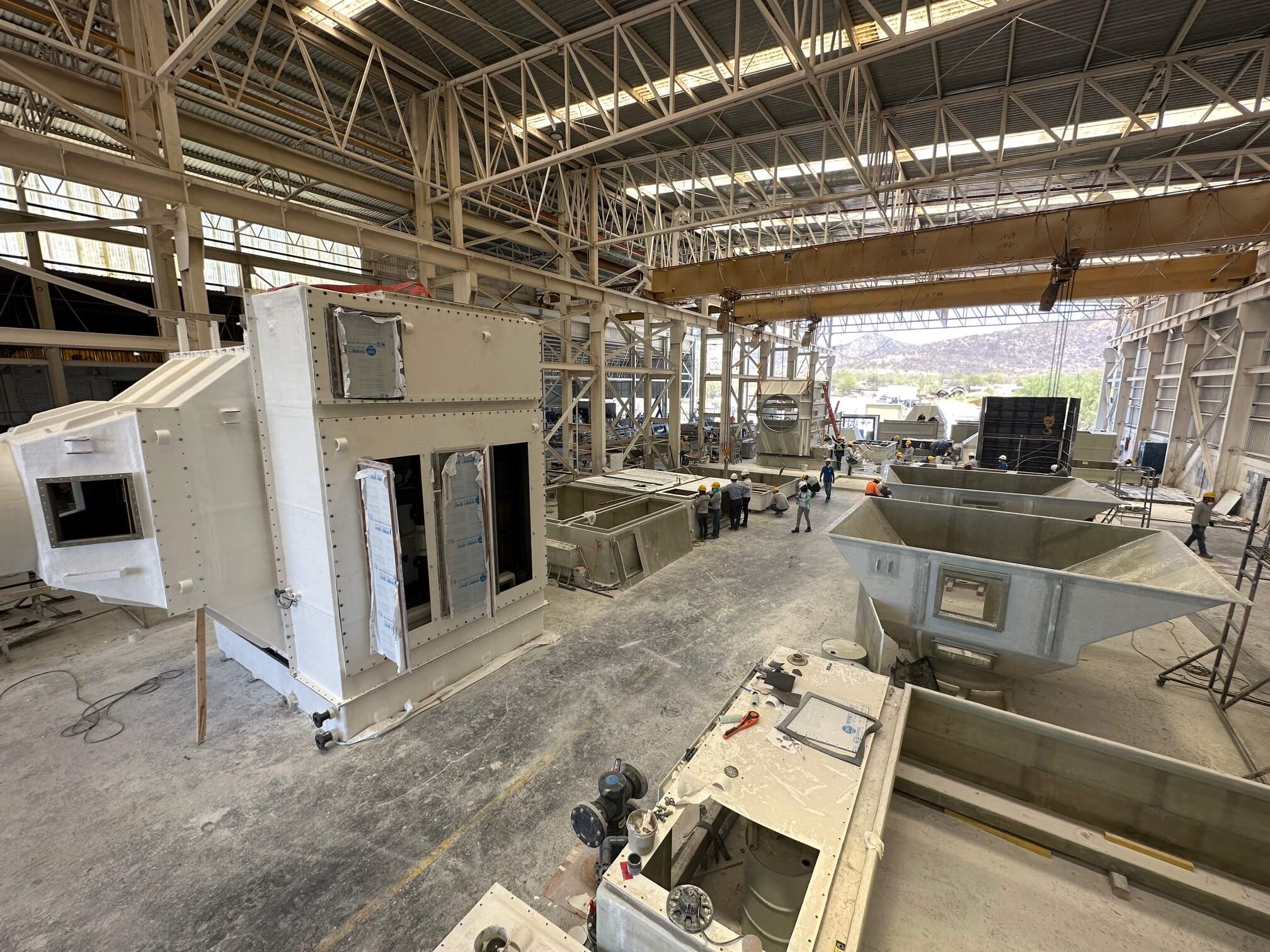
A buyer's guide to choosing the right resin system for FRP tanks and piping — resin families, chemical resistance testing, temperature limits, and what to specify before you order.
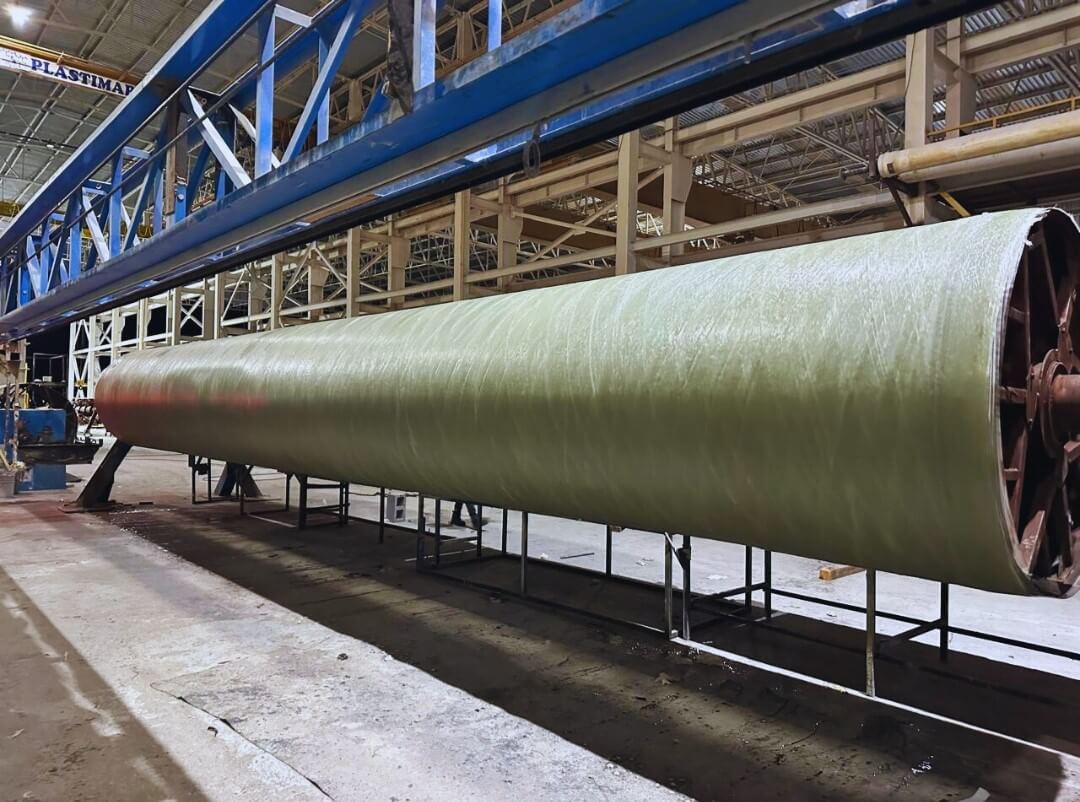
A buyer's guide to how FRP tanks are actually built — filament winding versus contact molding (hand lay-up) — and how each method affects structural performance, cost, and lead time.
Article Summary
How to select FRP tanks and piping for hydrochloric acid service—resin systems, fluoropolymer liners, temperature limits, permeation, and the ASTM standards to specify.
Need help with an FRP application?
Share your service conditions, chemical exposure, dimensions, or performance requirements and our team can help you evaluate the right FRP solution.
Request a Quote