

Filament Winding vs. Contact Molding for FRP Tanks
A buyer's guide to how FRP tanks are actually built — filament winding versus contact molding (hand lay-up) — and how each method affects structural performance, cost, and lead time.
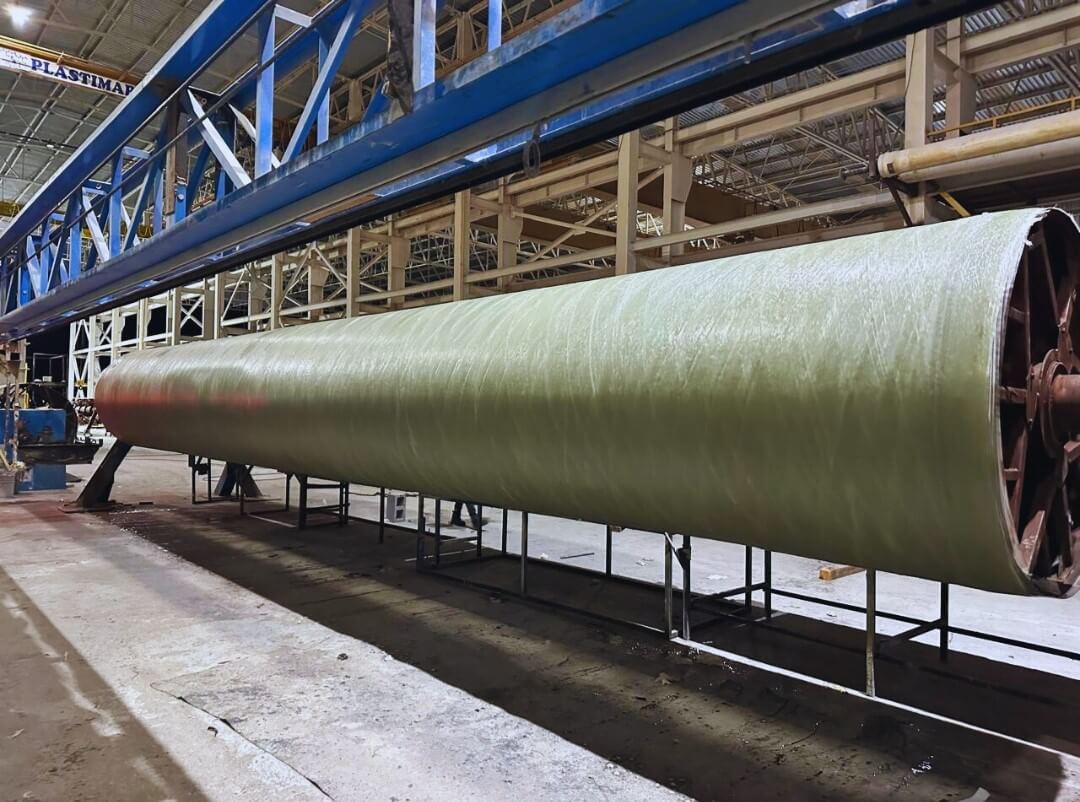
Filament Winding vs. Contact Molding for FRP Tanks
When you receive quotes for the same FRP tank from different fabricators, price and delivery time can vary significantly even though every quote references similar resin systems and wall thickness. Much of that variation traces back to a decision made on the shop floor: how the tank is actually built. Contact molding and filament winding are the two fabrication methods recognized by industry standards for chemical-resistant FRP tanks, and each produces a structurally different laminate. Understanding which method applies to your specification — and why — helps you evaluate quotes on substance instead of price alone.
Why Fabrication Method Matters, Not Just Resin
Buyers often focus their technical review on resin chemistry — vinyl ester versus isophthalic polyester, glass content, veil layers — because that is what governs chemical resistance. But two tanks built with identical resin and identical wall thickness can have very different mechanical properties depending on how the fiberglass reinforcement is oriented and compacted during lamination. Fabrication method determines fiber orientation, void content, and laminate uniformity, which in turn determine hoop strength, axial strength, and how the tank performs under hydrostatic load, vacuum, or wind loading over its service life. Skipping this question and comparing quotes on price and wall thickness alone can mean comparing two structurally different products as if they were interchangeable.
Contact Molding: Manual Lay-Up Under ASTM D4097
Contact molding, also called hand lay-up, is the fabrication method covered by ASTM D4097, the standard specification for contact-molded glass-fiber-reinforced thermoset resin corrosion-resistant tanks. In this process, fiberglass reinforcement — chopped strand mat, woven roving, or a combination of both — is applied by hand over a mold, saturated with resin using rollers or brushes, and built up layer by layer until the laminate reaches the specified wall thickness. Because the laminate is built manually, contact molding is well suited to:
- Tanks with complex geometry: conical bottoms, multiple flanged nozzles, internal baffles, or non-standard shapes that are difficult or uneconomical to wind.
- Low-to-medium production volumes, where mold and tooling cost needs to stay proportional to a small number of units.
- Field fabrication and large-diameter tanks that exceed the practical size limits of winding equipment.
The trade-off is that laminate quality depends heavily on the skill and consistency of the laminator and on the shop's quality control procedures. Reinforcement orientation in a hand lay-up laminate is largely random and mat-dominant, which gives contact-molded tanks good multi-directional strength but generally lower hoop tensile strength than an equivalent filament-wound laminate of the same thickness.
Filament Winding: Continuous Fiber Placement Under ASTM D3299
Filament winding is covered by ASTM D3299, the standard specification for filament-wound glass-fiber-reinforced thermoset resin chemical-resistant tanks. In this process, continuous glass fiber roving is drawn through a resin bath and wound under controlled tension onto a rotating mandrel at a specified winding angle, layer after layer, until the tank reaches its design wall thickness. Because fiber placement is machine-controlled, filament winding produces:
- Higher, more consistent glass content and a more predictable laminate structure than hand lay-up.
- Superior hoop tensile strength, since the winding angle can be optimized for circumferential stress — the dominant stress in a cylindrical tank under internal or hydrostatic pressure.
- Repeatable dimensional tolerances, which matters for tanks built in volume or to a standardized diameter range.
The trade-off is that filament winding is most economical for straightforward cylindrical geometry. Complex nozzle arrangements, conical transitions, and internal fittings are typically still completed by hand lay-up as secondary operations, even on a primarily filament-wound tank. In practice, most filament-wound tanks are a hybrid: a wound cylindrical shell combined with hand-laminated heads, nozzles, and appurtenances.
Key Differences That Affect Your Specification
Once you know both processes exist, the practical question is which one fits your tank. A few differences tend to matter most:
- Structural performance: filament winding typically delivers higher hoop strength for a given wall thickness and glass content; contact molding delivers more uniform multi-directional strength, which can matter for tanks subject to significant axial or bending loads, such as elevated tanks or horizontal tanks on saddles.
- Geometry: contact molding handles complex shapes and large-diameter or field-built tanks more economically; filament winding favors standard cylindrical, vertical tank configurations.
- Wall thickness control: filament winding achieves tighter, more repeatable thickness tolerances; contact-molded thickness depends more on laminator technique and in-process quality control checks.
- Production economics: filament winding tooling (mandrels) carries higher upfront cost but lower per-unit labor at volume; contact molding tooling is comparatively low-cost and flexible for one-off or low-volume orders.
Neither method is categorically better. The right choice depends on tank size, geometry, service conditions, and order volume, which is why both ASTM D3299 and ASTM D4097 remain active, current standards rather than one superseding the other.
What to Specify When Ordering
Regardless of fabrication method, your purchase specification should state:
- The applicable ASTM standard — D3299 or D4097 — and the tank type/class defined within that standard.
- Minimum glass content by weight for the structural laminate, and the interior corrosion barrier construction, typically a resin-rich layer reinforced with veil, specified separately from the structural laminate.
- Design pressure or vacuum rating, specific gravity of the contained fluid, and operating temperature range, since these drive the wall thickness calculation regardless of fabrication method.
- Quality control documentation: laminate thickness records, glass content verification, and dimensional/visual inspection reports referenced to the governing standard.
Asking your fabricator which method they propose — and why, for your specific tank size and geometry — is a legitimate technical question, not a formality. A fabricator who can explain the trade-off for your application is generally applying engineering judgment rather than defaulting to whatever tooling their shop happens to have on hand.
Our Experience
Over more than 40 years fabricating exclusively FRP equipment, and across more than 2,600 projects, we've built tanks using both contact molding and filament winding, matching method to geometry, service condition, and order volume rather than defaulting to one process for every job. That includes complex, field-erected vessels with multiple nozzles and internal components built by hand lay-up, and standard cylindrical tanks built by filament winding to maximize hoop strength at a given wall thickness. Where fluoropolymer liners are specified for aggressive chemical service, we've applied them for more than 20 years, independent of which structural fabrication method the outer laminate uses.
Final Thoughts
The fabrication method behind your FRP tank shapes its mechanical performance as much as the resin system does. When you're comparing quotes, ask which ASTM standard and which method each fabricator is proposing, and confirm the choice matches your tank's geometry, loading, and service conditions — not just the lowest number on the page. If you're specifying an FRP tank and want a second opinion on which fabrication method fits your application, reach out to our team. We can walk through your requirements and recommend the right approach.
References
ASTM International. (2018). Standard specification for filament-wound glass-fiber-reinforced thermoset-resin chemical-resistant tanks (ASTM D3299-18). ASTM International.
ASTM International. (2017). Standard specification for contact-molded glass-fiber-reinforced thermoset resin corrosion-resistant tanks (ASTM D4097-17). ASTM International.
ASTM International. (2020). Standard practice for determining chemical resistance of thermosetting resins used in glass-fiber-reinforced structures intended for liquid service (ASTM C581-20). ASTM International.
Explore Related FRP Products
-
FRP Tanks
Custom FRP tanks for chemical storage, wastewater treatment and industrial fluid handling. -
FRP Pipes
Corrosion-resistant FRP pipes for industrial piping systems.
Related Articles

A buyer's guide to inspecting FRP tanks in corrosive service — external and internal checks, Barcol hardness baselines, inspection intervals, and the ASTM standards that define acceptance criteria.
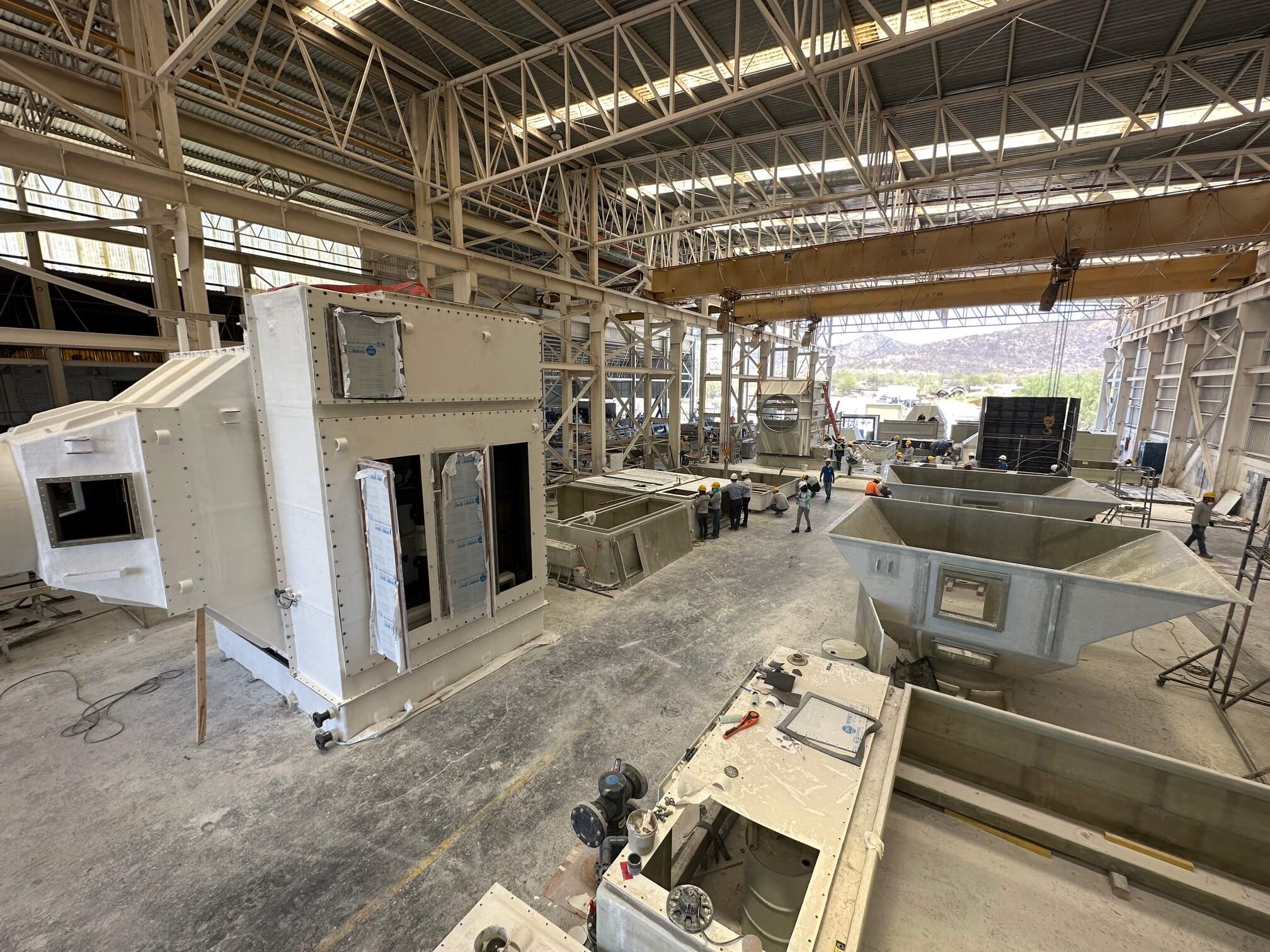
A buyer's guide to choosing the right resin system for FRP tanks and piping — resin families, chemical resistance testing, temperature limits, and what to specify before you order.
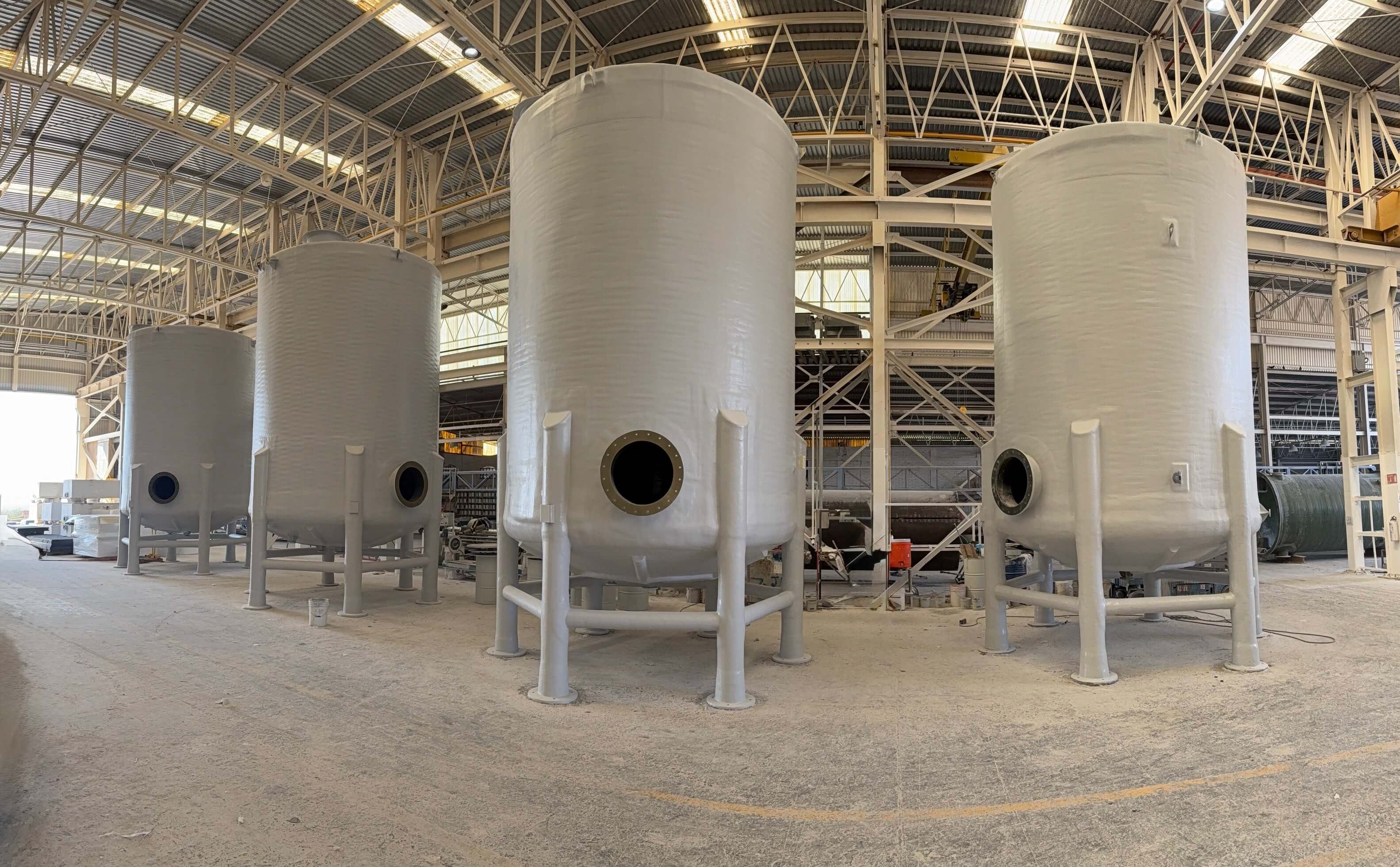
How to select FRP tanks and piping for hydrochloric acid service—resin systems, fluoropolymer liners, temperature limits, permeation, and the ASTM standards to specify.
Article Summary
A buyer's guide to how FRP tanks are actually built — filament winding versus contact molding (hand lay-up) — and how each method affects structural performance, cost, and lead time.
Need help with an FRP application?
Share your service conditions, chemical exposure, dimensions, or performance requirements and our team can help you evaluate the right FRP solution.
Request a Quote