

FRP vs HDPE: Corrosion-Resistant Piping & Tanks
Compare FRP and HDPE for corrosive tanks and piping—temperature limits, chemical resistance, stiffness, and lifecycle value to help you specify the right material.
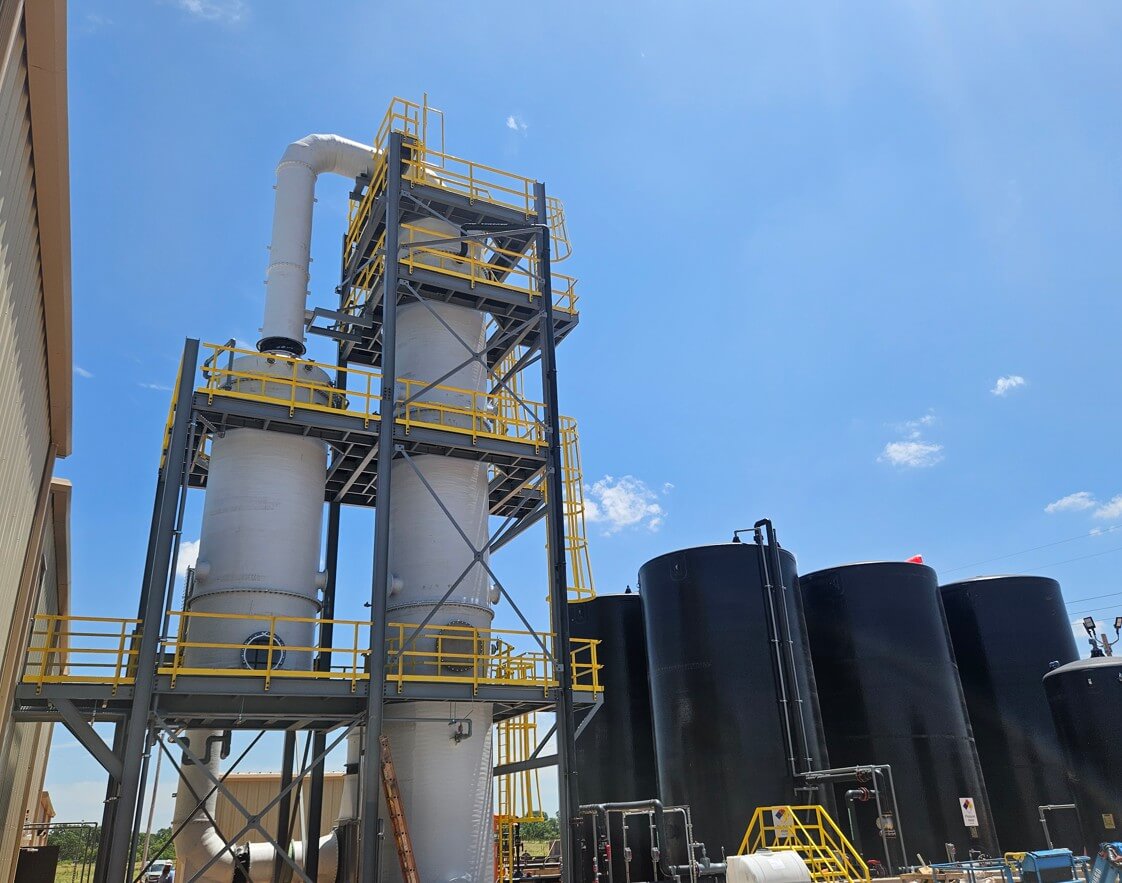
FRP vs HDPE: Corrosion-Resistant Piping & Tanks
When a buyer or specifying engineer needs corrosion-resistant tanks or piping for acids, caustics, or process effluents, two non-metallic materials usually make the short list: fiberglass-reinforced plastic (FRP) and high-density polyethylene (HDPE). Both eliminate the coating maintenance and galvanic problems of metals, but they behave very differently under temperature, pressure, and structural load. Choosing the wrong one is rarely about chemical compatibility alone—it is about service conditions. This guide breaks down where each material wins so you can specify with confidence.
Why This Comparison Matters
FRP and HDPE both resist a broad range of corrosive media, so a chemical-resistance chart alone will often show both as "compatible." That is where specifications go wrong. The real differentiators are operating temperature, internal pressure, diameter, structural rigidity, and expected service life. In mining, chemical processing, and water/wastewater, the same fluid can be handled by either material at ambient temperature—but only one may survive once you add heat, head pressure, or large unsupported spans. Understanding the underlying material physics keeps you from over-specifying an expensive solution or under-specifying one that fails early.
The Core Difference: Thermoset vs Thermoplastic
FRP is a thermoset composite: glass-fiber reinforcement bound in a cross-linked resin matrix (typically isophthalic polyester or vinyl ester). Once cured, it does not soften with heat. HDPE is a thermoplastic: a single homogeneous polymer that softens as temperature rises and is joined by fusion welding rather than laminated.
This single distinction drives almost every performance difference that follows:
- FRP gains stiffness and load capacity from its glass reinforcement; HDPE relies entirely on the polymer itself.
- FRP holds its mechanical properties up to far higher service temperatures because the cured resin will not melt.
- HDPE is more flexible and impact-tolerant at low temperatures, which favors buried and flexible-line applications.
- FRP laminates can be engineered with a dedicated corrosion barrier and a separate structural layer; HDPE is one wall thickness doing both jobs.
Chemical and Corrosion Resistance
Both materials are fundamentally corrosion-resistant and will not rust, pit, or require sacrificial coatings. The difference is how resistance is achieved and validated. In FRP, chemical resistance is engineered into the resin system and the corrosion barrier, then validated against ASTM C581 for the specific fluid, concentration, and temperature. A resin-rich liner backed by a structural laminate lets you tune the design to the exact service environment.
HDPE offers excellent resistance to a wide range of acids, bases, and salts at moderate temperatures, and it is largely immune to many solutions that attack the resins used in FRP. Where HDPE is weaker is with strong oxidizers and certain hydrocarbons, and—critically—its resistance erodes quickly as temperature climbs. FRP, by contrast, can be matched to aggressive oxidizing acids through resin selection and, when service is hot or especially harsh, a thermoplastic or fluoropolymer liner bonded behind the FRP structural wall.
Temperature and Pressure Performance
This is where most FRP-vs-HDPE decisions are actually made. A standard vinyl ester FRP laminate handles continuous service in roughly the 180–200°F (82–93°C) range, and higher with specialized resins or liners. HDPE is typically capped near 140°F (60°C) for continuous service, and its allowable pressure derates sharply as temperature rises—an HDPE line rated for a given pressure at ambient may carry only a fraction of that rating when the fluid is warm.
Pressure capacity follows the same logic. FRP tanks and piping can be engineered to defined pressure and vacuum ratings through laminate thickness and reinforcement architecture. HDPE pressure piping is rated by standard dimension ratio, but those ratings fall with temperature, which limits hot-service applications. For elevated-temperature corrosive duty, FRP is usually the more capable—and often the only viable—non-metallic option.
Stiffness, Diameter, and Service Life
FRP has a far higher tensile and flexural modulus than HDPE, meaning it is significantly stiffer per unit wall thickness. For large-diameter tanks, scrubbers, ducting, and above-grade piping with long unsupported spans, that stiffness translates into lighter walls, fewer supports, and better dimensional stability. HDPE's flexibility is an advantage for buried, snaking, or vibration-prone lines, but it requires more continuous support above grade and is prone to sag and creep under sustained load and heat.
Thermal expansion is another practical factor: HDPE's coefficient of thermal expansion is roughly an order of magnitude higher than FRP's, so HDPE systems need expansion loops and careful anchoring to manage movement, while FRP stays comparatively dimensionally stable. On service life, both materials routinely exceed coated steel in corrosive duty; the deciding factor is whether the material is operating within its temperature and pressure envelope. An FRP tank built to a validated corrosion barrier and a properly supported HDPE line can both deliver decades of service—within their respective limits.
What to Specify When Comparing FRP and HDPE
To get an accurate side-by-side comparison and a sound material recommendation, provide your supplier with:
- The chemical, its concentration, and any contaminants or oxidizers present.
- Operating and peak temperatures (continuous and excursion).
- Internal pressure and/or vacuum, plus static head for tanks.
- Diameter, capacity, and span or support conditions.
- Installation environment: buried, above grade, UV exposure, seismic, or marine.
- Required design standard and any corrosion-barrier or liner expectations.
With these inputs, FRP can be engineered to a specific standard—ASTM D3299 for filament-wound tanks or ASTM D4097 for contact-molded tanks—with the resin and corrosion barrier validated under ASTM C581 for your exact fluid and temperature.
Our Experience
We have built fiberglass equipment exclusively for more than 40 years, across 2,600+ projects in mining, chemical processing, and water and wastewater. That focus has taught us where FRP clearly outperforms thermoplastics—hot acids, large-diameter vessels, and structurally demanding piping—and where a simpler material is the right call. When service is hot or especially aggressive, we have more than 20 years applying fluoropolymer liners behind FRP to extend the chemical and temperature envelope well beyond what an unlined thermoplastic can reach.
Final Thoughts
FRP and HDPE are both excellent corrosion-resistant materials, but they are not interchangeable. HDPE is a strong, economical choice for moderate-temperature, buried, or flexible-line service. FRP is the stronger option when temperatures climb, pressures rise, diameters grow, or structural rigidity matters—and it can be tuned to the exact chemistry through resin selection and validated corrosion barriers. The right answer always comes back to your specific service conditions.
Considering FRP for your next corrosion-critical application? Schedule a technical call with Arizona FRP Supply to review your service conditions and get a material recommendation backed by engineering.
References
ASTM International. (2020). Standard specification for filament-wound glass-fiber-reinforced thermoset-resin corrosion-resistant tanks (ASTM D3299). ASTM International.
ASTM International. (2019). Standard specification for contact-molded glass-fiber-reinforced thermoset-resin corrosion-resistant tanks (ASTM D4097). ASTM International.
ASTM International. (2020). Standard practice for determining chemical resistance of thermosetting resins used in glass-fiber-reinforced structures intended for liquid service (ASTM C581). ASTM International.
Explore Related FRP Products
-
FRP Tanks
Custom FRP tanks for chemical storage, wastewater treatment and industrial fluid handling. -
FRP Pipes
Corrosion-resistant FRP pipes for industrial piping systems. -
FRP Flanges, Elbows & Tees
FRP flanges, elbows, tees and fittings for corrosion-resistant piping systems.
Related Articles

A buyer's guide to inspecting FRP tanks in corrosive service — external and internal checks, Barcol hardness baselines, inspection intervals, and the ASTM standards that define acceptance criteria.
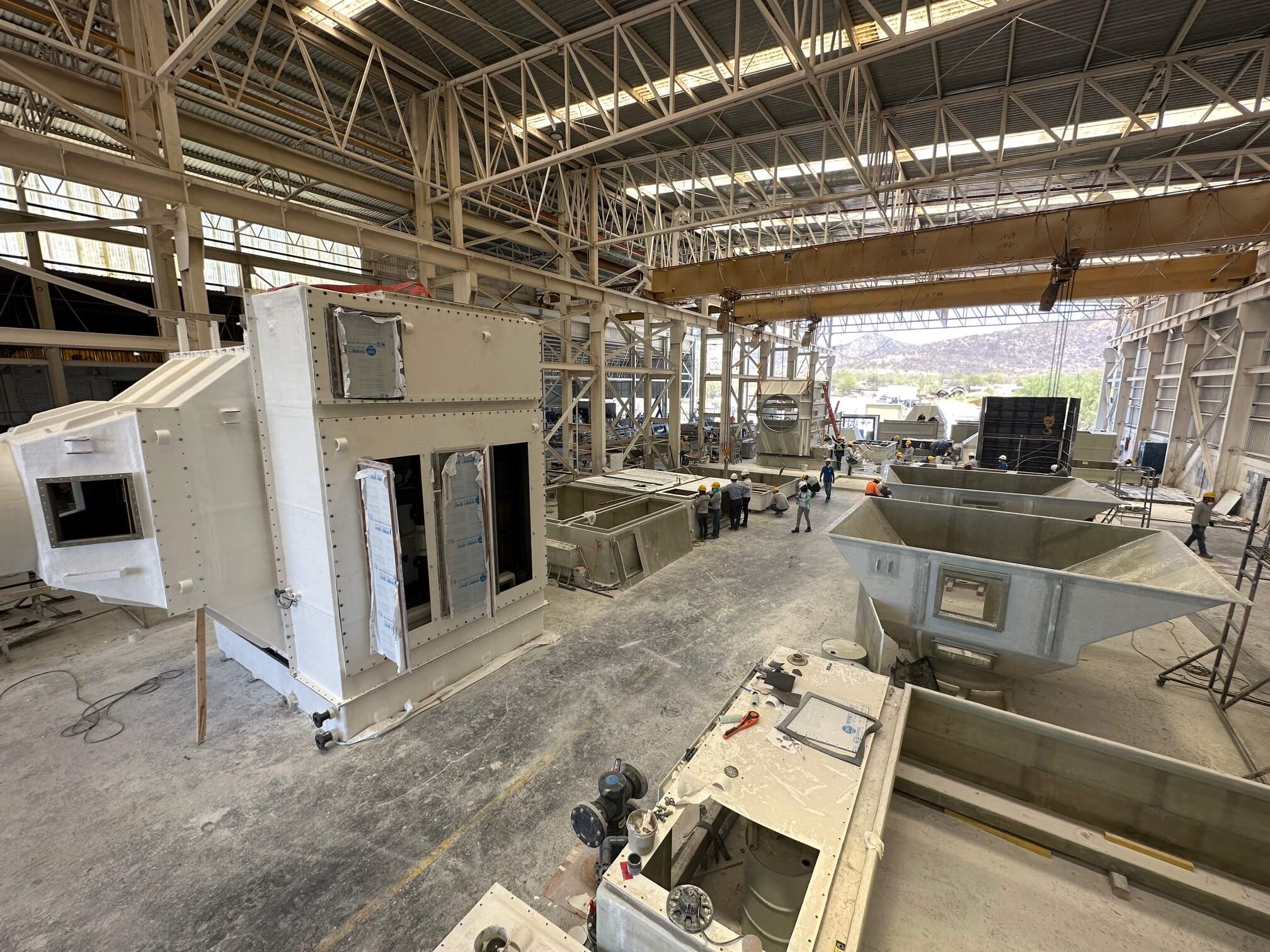
A buyer's guide to choosing the right resin system for FRP tanks and piping — resin families, chemical resistance testing, temperature limits, and what to specify before you order.
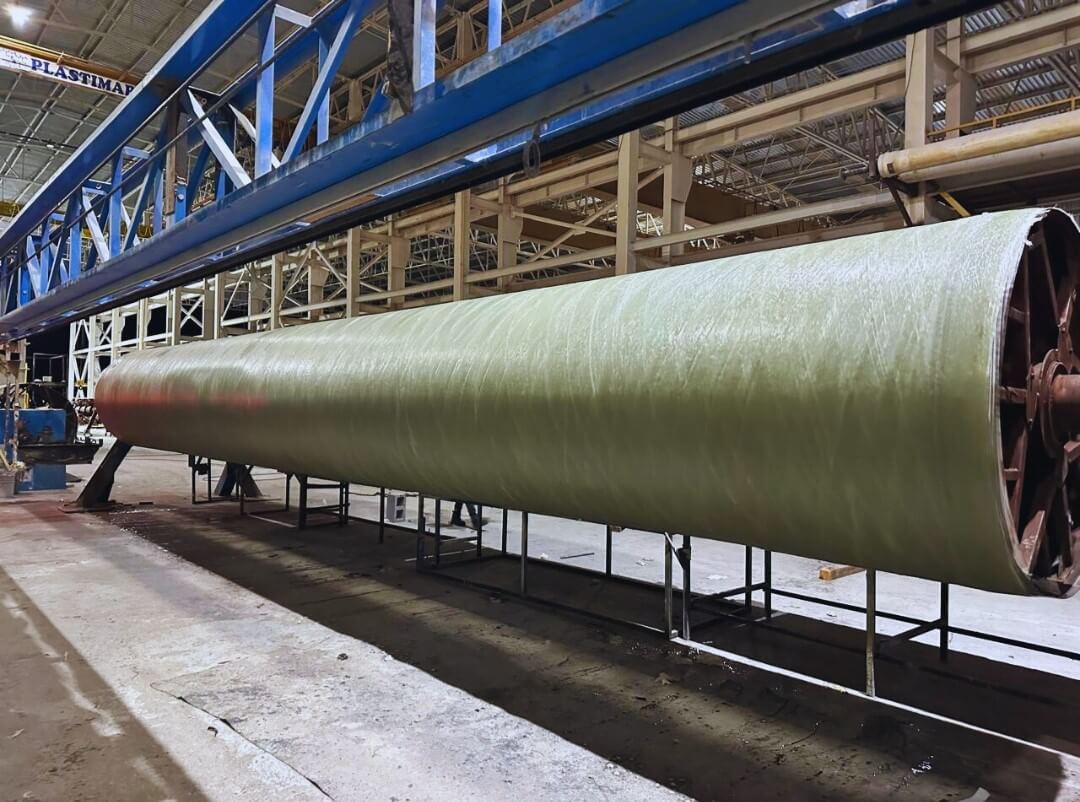
A buyer's guide to how FRP tanks are actually built — filament winding versus contact molding (hand lay-up) — and how each method affects structural performance, cost, and lead time.
Article Summary
Compare FRP and HDPE for corrosive tanks and piping—temperature limits, chemical resistance, stiffness, and lifecycle value to help you specify the right material.
Need help with an FRP application?
Share your service conditions, chemical exposure, dimensions, or performance requirements and our team can help you evaluate the right FRP solution.
Request a Quote