

FRP Tanks for Mining: Leaching & Electrowinning (SX-EW)
A buyer's guide to specifying FRP tanks and cells for SX-EW mining service — sulfuric acid resistance, temperature limits, abrasion, and the ASTM standards that protect your investment.
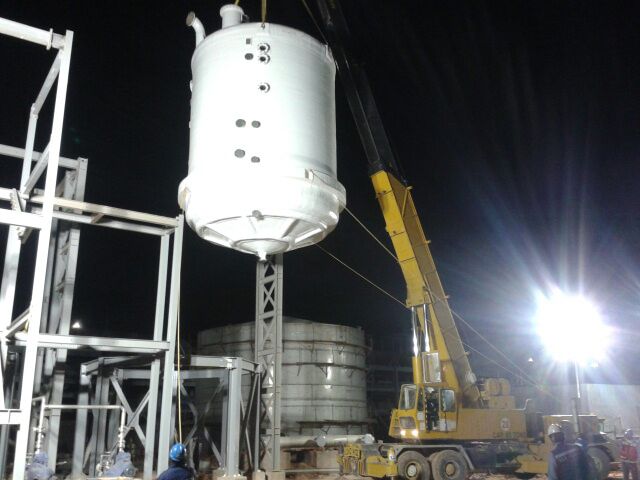
FRP Tanks for Mining: Leaching & Electrowinning (SX-EW)
Few environments punish materials the way a solvent extraction–electrowinning (SX-EW) circuit does. The process moves dilute sulfuric acid solutions through leaching, extraction, and electrowinning while carrying suspended solids, dissolved metals, and—depending on the orebody—chlorides and other aggressive ions. For a buyer or specifying engineer, the question is rarely "will this tank hold liquid?" It is "will this tank survive years of acid, heat, and abrasion without leaks, contamination, or unplanned shutdowns?" Fiberglass reinforced plastic (FRP) has become a default answer across pregnant leach solution (PLS) ponds, feed tanks, raffinate tanks, electrolyte storage, and a range of process vessels—but only when it is specified correctly.
This guide walks through what makes SX-EW service so demanding, why FRP performs well when engineered for the duty, and exactly what to put on your purchase specification so you receive a tank built for the application rather than a generic vessel.
Why SX-EW Is So Hard on Storage and Process Tanks
SX-EW combines three corrosion and wear mechanisms that rarely appear together at this intensity:
- Sustained acid exposure. PLS, raffinate, and electrolyte streams are sulfuric-acid based and run continuously, not in batches. Materials are wetted around the clock.
- Elevated temperature. Heap leach and electrowinning streams often run warm, and temperature accelerates almost every corrosion mechanism. A material that resists acid at ambient conditions can fail quickly when the same acid is hot.
- Abrasion and entrained solids. Leach circuits carry fine particulates. Over time, abrasion thins liners and exposes structural laminate to chemical attack.
On top of this, many sites sit at remote, high-altitude locations where a failed metal tank means long lead times, costly cranes, and lost production. The cost of getting the material wrong is measured in downtime, not just replacement steel.
Why FRP Holds Up—When It Is Engineered for the Duty
FRP is not a single material; it is a system. A properly built corrosion-service tank is made of two functional zones. The inner corrosion barrier—a resin-rich layer reinforced with surfacing veil and chopped strand—is what actually contacts the acid and does the chemical work. Behind it, the structural laminate carries the mechanical loads. When you specify an FRP tank for SX-EW, you are really specifying the resin chemistry of that corrosion barrier and the integrity of the laminate behind it.
For sulfuric acid duty, corrosion-grade vinyl ester resins are the workhorse. As a practical planning figure, standard vinyl ester FRP is suited to continuous service in the range of roughly 180–200°F (82–93°C), which covers the great majority of SX-EW streams. Where a process runs hotter or carries an unusually aggressive combination of acid, oxidizers, or chlorides, the corrosion barrier can be upgraded with a thermoplastic fluoropolymer liner. These liners extend the usable temperature window substantially—ECTFE, for example, is rated for service to about 320°F (160°C) and PVDF to about 284°F (140°C)—and add a dense, low-permeation barrier against the most demanding chemistries.
The Role of Resin Selection
The single most important line on your specification is the resin. Two tanks that look identical can perform completely differently because of the resin in the corrosion barrier. This is where ASTM C581 matters: it is the standard practice for evaluating the chemical resistance of a thermosetting resin in the specific environment it will see. Rather than accepting a generic "chemical resistant" claim, ask your supplier to tie the resin selection to the actual stream—acid concentration, temperature, and contaminants—and to the C581 framework.
Practical guidance for buyers:
- State the chemistry, temperature, and solids loading of each stream. "Sulfuric acid" alone is not a specification.
- Require a corrosion barrier appropriate to the duty, with a defined liner type where temperature or chemistry demand it.
- Ask whether a fluoropolymer liner is warranted for your hottest or most aggressive vessels rather than over-specifying every tank.
Fabrication Method and Build Quality
How the tank is built is as important as the resin. Two ASTM specifications govern corrosion-resistant FRP tanks, and the right one depends on geometry and load:
- ASTM D3299 covers filament-wound tanks, where continuous glass is wound under controlled tension. This method delivers high, predictable structural strength and is well suited to larger vertical tanks.
- ASTM D4097 covers contact-molded (hand lay-up) tanks, which offer flexibility for complex shapes, fittings, and field-specific geometry.
For aggressive acid service, hardness is a useful, inexpensive quality check. ASTM D2583 measures Barcol hardness, which confirms that the resin has fully cured. An under-cured laminate will not deliver the chemical resistance the resin is capable of, so a Barcol reading on the finished part is a simple way to verify build quality before the tank ever sees acid.
What to Specify When You Order
To receive a tank built for SX-EW rather than a generic vessel, put the following on your purchase specification:
- Service definition: stream type (PLS, raffinate, electrolyte), chemistry, maximum operating temperature, and solids content.
- Corrosion barrier: resin system tied to ASTM C581 evaluation, with fluoropolymer liner specified where temperature or chemistry require it.
- Fabrication standard: ASTM D3299 (filament-wound) or ASTM D4097 (contact-molded), matched to the tank geometry and loads.
- Quality verification: Barcol hardness per ASTM D2583, plus visual and dimensional acceptance criteria.
- Details: nozzle and manway locations, anchoring and seismic loads, venting, and any abrasion-resistant provisions for solids-laden streams.
Applicable ASTM Standards
SX-EW tanks are atmospheric process and storage vessels, so the governing specifications are the FRP tank standards—ASTM D3299 and ASTM D4097—supported by ASTM C581 for resin chemical resistance and ASTM D2583 for cure verification. Pressure-vessel codes do not apply to these atmospheric tanks; if you see them cited for an open or vented vessel, ask why.
Our Experience
We have spent more than 40 years building exclusively in FRP, across more than 2,600 projects, with a heavy concentration in mining, chemical processing, and water treatment. We have built tanks and process vessels for sulfuric acid circuits where the combination of acid, heat, and abrasion leaves no margin for a generic build. For the hottest and most aggressive duties, we have applied thermoplastic fluoropolymer liners for over 20 years, matching the liner to the stream rather than over-building every vessel. That experience is what turns a material specification into a tank that runs for years.
Final Thoughts
FRP earns its place in SX-EW because it resists sulfuric acid, tolerates the temperatures of most leach and electrowinning streams, and—when lined—handles the hot, aggressive exceptions, all without the corrosion liabilities of metals. The difference between a tank that lasts and one that fails is in the specification: the resin in the corrosion barrier, the fabrication standard, and verified cure. Define the service, tie the resin to ASTM C581, choose D3299 or D4097 for the build, and require a Barcol check.
If you are specifying tanks for a leaching or electrowinning circuit, tell us your stream chemistry, temperature, and solids loading, and we will help you match the corrosion barrier, liner, and fabrication method to the duty. Request a quote and we will point you toward the right FRP solution for your application.
References
ASTM International. (2020). Standard practice for determining chemical resistance of thermosetting resins used in glass-fiber-reinforced structures intended for liquid service (ASTM C581-20). ASTM International.
ASTM International. (2021). Standard test method for indentation hardness of rigid plastics by means of a Barcol impressor (ASTM D2583-13a(2021)). ASTM International.
ASTM International. (2020). Standard specification for filament-wound glass-fiber-reinforced thermoset resin corrosion-resistant tanks (ASTM D3299-10(2020)). ASTM International.
ASTM International. (2019). Standard specification for contact-molded glass-fiber-reinforced thermoset resin chemical-resistant tanks (ASTM D4097-19). ASTM International.
Explore Related FRP Products
-
FRP Tanks
Custom FRP tanks for chemical storage, wastewater treatment and industrial fluid handling. -
FRP Scrubbers
FRP scrubbers for industrial gas cleaning, odor control and corrosive fume treatment.
Related Articles

A buyer's guide to inspecting FRP tanks in corrosive service — external and internal checks, Barcol hardness baselines, inspection intervals, and the ASTM standards that define acceptance criteria.
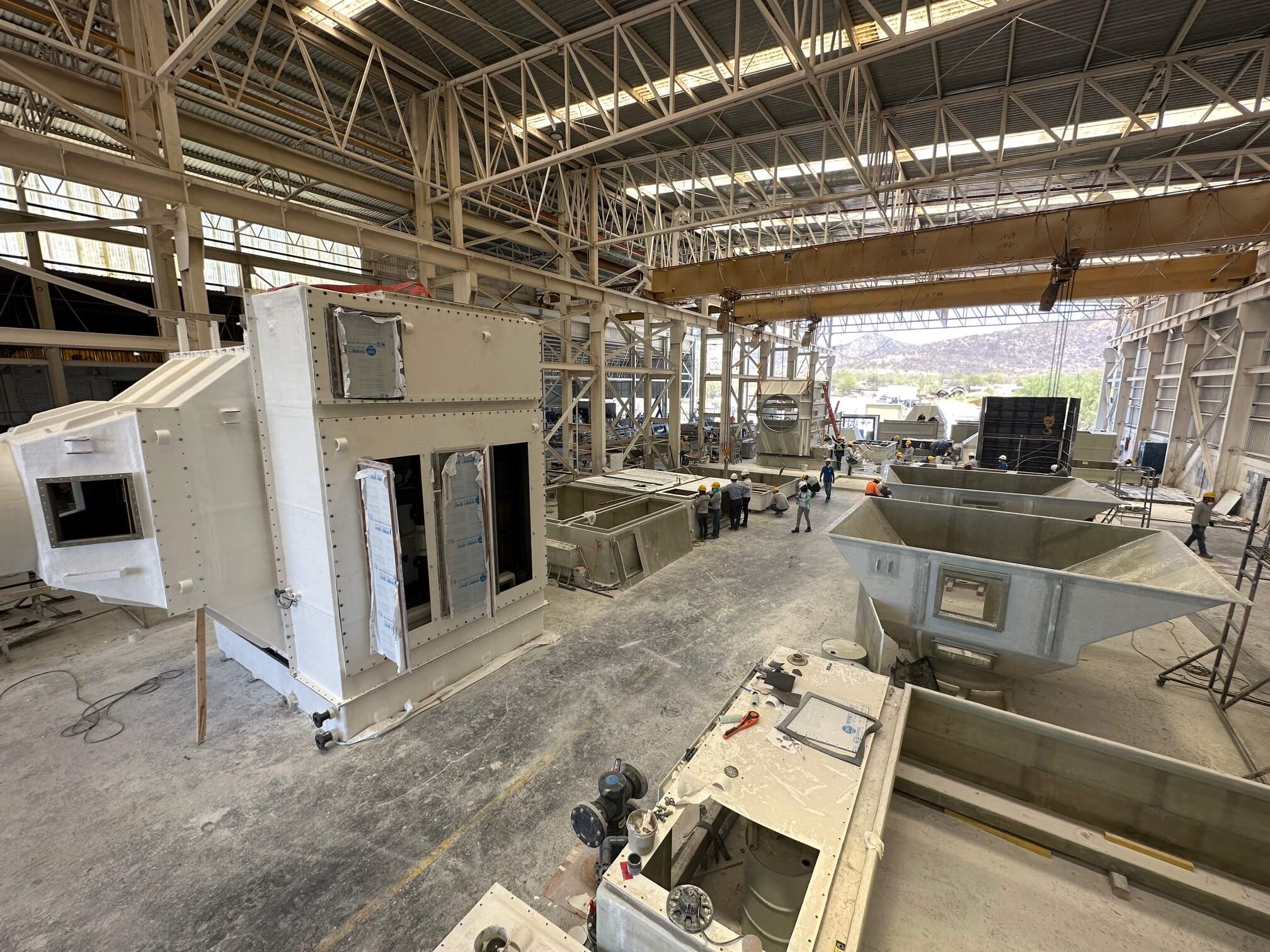
A buyer's guide to choosing the right resin system for FRP tanks and piping — resin families, chemical resistance testing, temperature limits, and what to specify before you order.
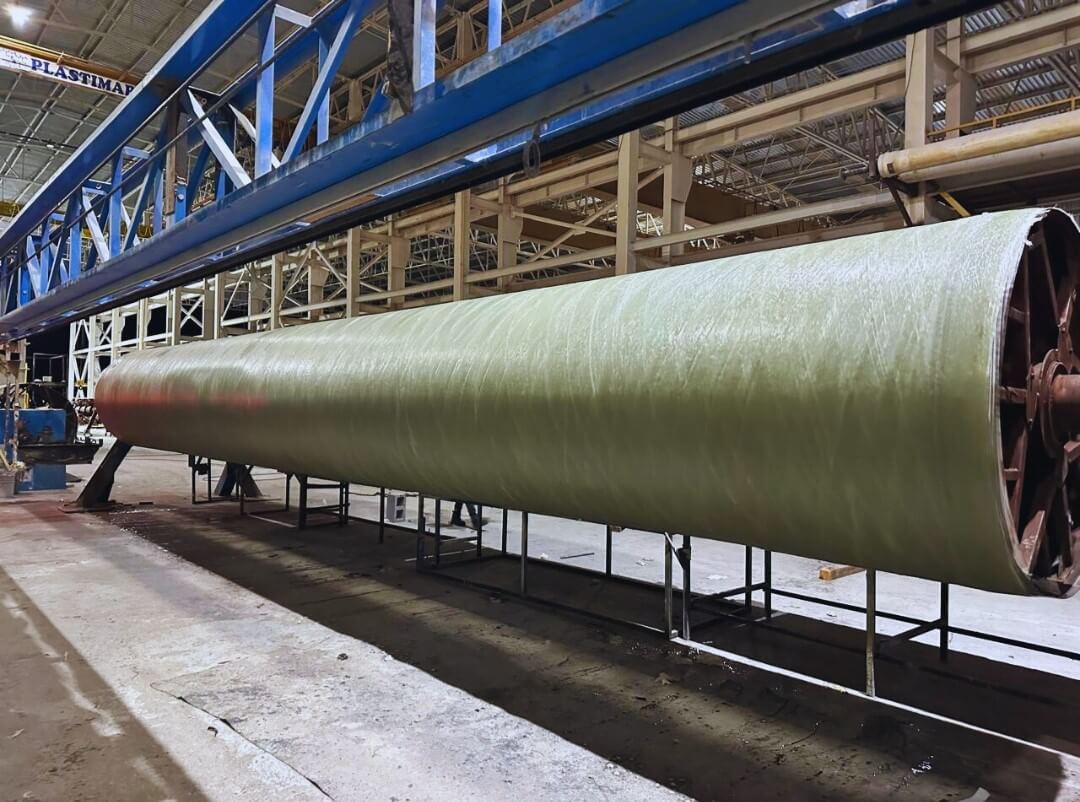
A buyer's guide to how FRP tanks are actually built — filament winding versus contact molding (hand lay-up) — and how each method affects structural performance, cost, and lead time.
Article Summary
A buyer's guide to specifying FRP tanks and cells for SX-EW mining service — sulfuric acid resistance, temperature limits, abrasion, and the ASTM standards that protect your investment.
Need help with an FRP application?
Share your service conditions, chemical exposure, dimensions, or performance requirements and our team can help you evaluate the right FRP solution.
Request a Quote