

FRP Tanks for Sulfuric Acid Storage: Design, Standards, and Industrial Applications
A technical guide to FRP tanks for sulfuric acid storage, covering chemical properties, tank design considerations, ASTM standards, and industrial applications.
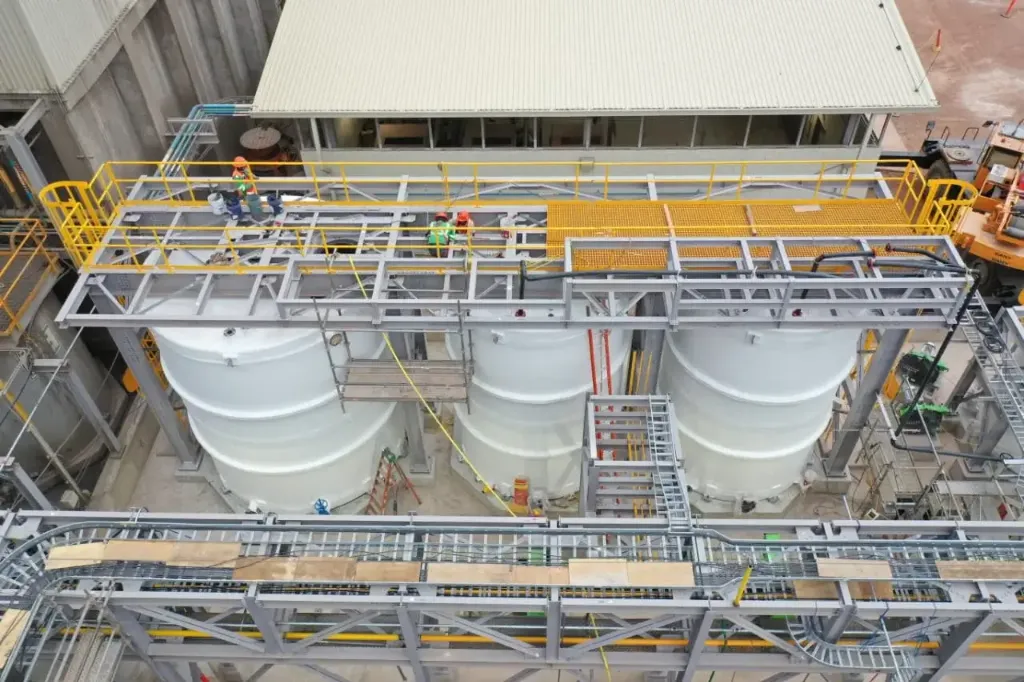
FRP Tanks for Sulfuric Acid Storage: Design, Standards, and Industrial Applications
Fiber Reinforced Plastic (FRP) tanks are widely used for sulfuric acid storage due to their excellent corrosion resistance, mechanical strength, and long service life. Sulfuric acid is one of the most challenging chemicals to store safely — its highly reactive and oxidizing nature can rapidly degrade conventional metallic systems. Properly designed FRP tanks provide a reliable, cost-effective solution for safe storage across mining, chemical processing, and industrial applications.
Chemical Properties of Sulfuric Acid and FRP Compatibility
Sulfuric acid (H₂SO₄) is a strong mineral acid with highly corrosive behavior, particularly at elevated concentrations and temperatures. Its dehydrating and oxidizing properties make material selection critical. FRP tanks engineered with the correct resin system and fiberglass reinforcement provide long-term resistance in demanding sulfuric acid service.
- Excellent corrosion resistance with properly selected vinyl ester resin systems
- Suitable for a broad range of concentrations — typically up to 70% H₂SO₄ depending on temperature and resin formulation
- Low maintenance requirements compared to metallic storage alternatives
- Reduced contamination risk due to non-metallic, non-reactive internal surfaces
Resin Selection Guidelines
Resin selection is the most critical design decision for FRP sulfuric acid tanks. Compatibility depends on both acid concentration and operating temperature. The following guidelines reflect general industry practice validated per ASTM C581:
- Vinyl ester resins — recommended for most sulfuric acid service, particularly at concentrations above 30% and temperatures up to 120°F (49°C). Offer superior chemical resistance and flexibility.
- Isophthalic polyester resins — suitable for dilute sulfuric acid service (below 30%) at ambient temperatures. Not recommended for concentrated acid or elevated temperatures.
- High-performance vinyl ester (bisphenol-based) — preferred for aggressive service conditions involving higher concentrations or temperature fluctuations.
All resin systems should be validated for the specific concentration and temperature of the application using ASTM C581 before final specification.
Design Considerations for FRP Sulfuric Acid Tanks
FRP tank design for sulfuric acid service must account for chemical concentration, operating temperature, tank capacity, structural loading, and installation environment. A properly engineered tank includes a corrosion-resistant inner liner and a structural laminate designed for the specific service.
- Corrosion liner thickness based on acid concentration and service severity — typically 100–200 mils for aggressive chemical service
- Structural laminate sized for hydrostatic load, wind, and seismic conditions per ASTM D3299 or D4097
- Fittings, nozzles, and supports designed to minimize stress concentration at penetrations
- Ventilation, overflow protection, and secondary containment provisions
- UV-resistant exterior coating for outdoor installations
Applicable ASTM Standards
The following ASTM standards govern the specification, fabrication, inspection, and testing of FRP tanks used in sulfuric acid and other corrosive chemical service:
- ASTM D3299 — filament-wound glass-fiber-reinforced thermoset resin chemical-resistant tanks
- ASTM D4097 — contact-molded glass-fiber-reinforced thermoset resin chemical-resistant tanks
- ASTM C581 — standard practice for evaluating chemical resistance of thermosetting resin laminates in liquid service
- ASTM D2583 — Barcol hardness testing of cured reinforced plastics to verify laminate quality
Industrial Applications
FRP sulfuric acid tanks are used across industries where corrosion resistance and long service life are non-negotiable. Common applications include:
- Mining and mineral processing — electrolyte storage, leach circuit containment, and acid distribution systems
- Chemical manufacturing and processing plants
- Water and wastewater treatment facilities
- Fertilizer production and agricultural chemical storage
- Metal finishing and surface treatment operations
Our Experience
With over 40 years of exclusive FRP manufacturing experience, Arizona FRP Supply has designed and supplied custom sulfuric acid storage tanks for large-scale mining and chemical operations across North America. Across more than 2,600 completed projects, our tanks are custom-engineered to ASTM standards and built specifically for the concentration, temperature, and operating conditions of each application — not off a shelf.
Final Thoughts
FRP tanks offer a proven, reliable solution for sulfuric acid storage when properly engineered for the specific service conditions. Resin selection, liner design, and compliance with ASTM standards are the three factors that determine long-term performance. Working with an experienced FRP manufacturer — one that understands both the chemistry and the engineering — is the most important step in getting the specification right.
References
ASTM International. (2022). ASTM D3299: Standard specification for filament-wound glass-fiber-reinforced thermoset resin chemical-resistant tanks. ASTM International. https://www.astm.org/d3299-22.html
ASTM International. (2021). ASTM D4097: Standard specification for contact-molded glass-fiber-reinforced thermoset resin chemical-resistant tanks. ASTM International. https://www.astm.org/d4097-21.html
ASTM International. (2019). ASTM C581: Standard practice for determining chemical resistance of thermosetting resins used in glass-fiber-reinforced structures intended for liquid service. ASTM International. https://www.astm.org/c0581-03r19.html
Explore Related FRP Products
-
FRP Tanks
Custom FRP tanks for chemical storage, wastewater treatment and industrial fluid handling. -
FRP Pipes
Corrosion-resistant FRP pipes for industrial piping systems.
Related Articles

A buyer's guide to inspecting FRP tanks in corrosive service — external and internal checks, Barcol hardness baselines, inspection intervals, and the ASTM standards that define acceptance criteria.
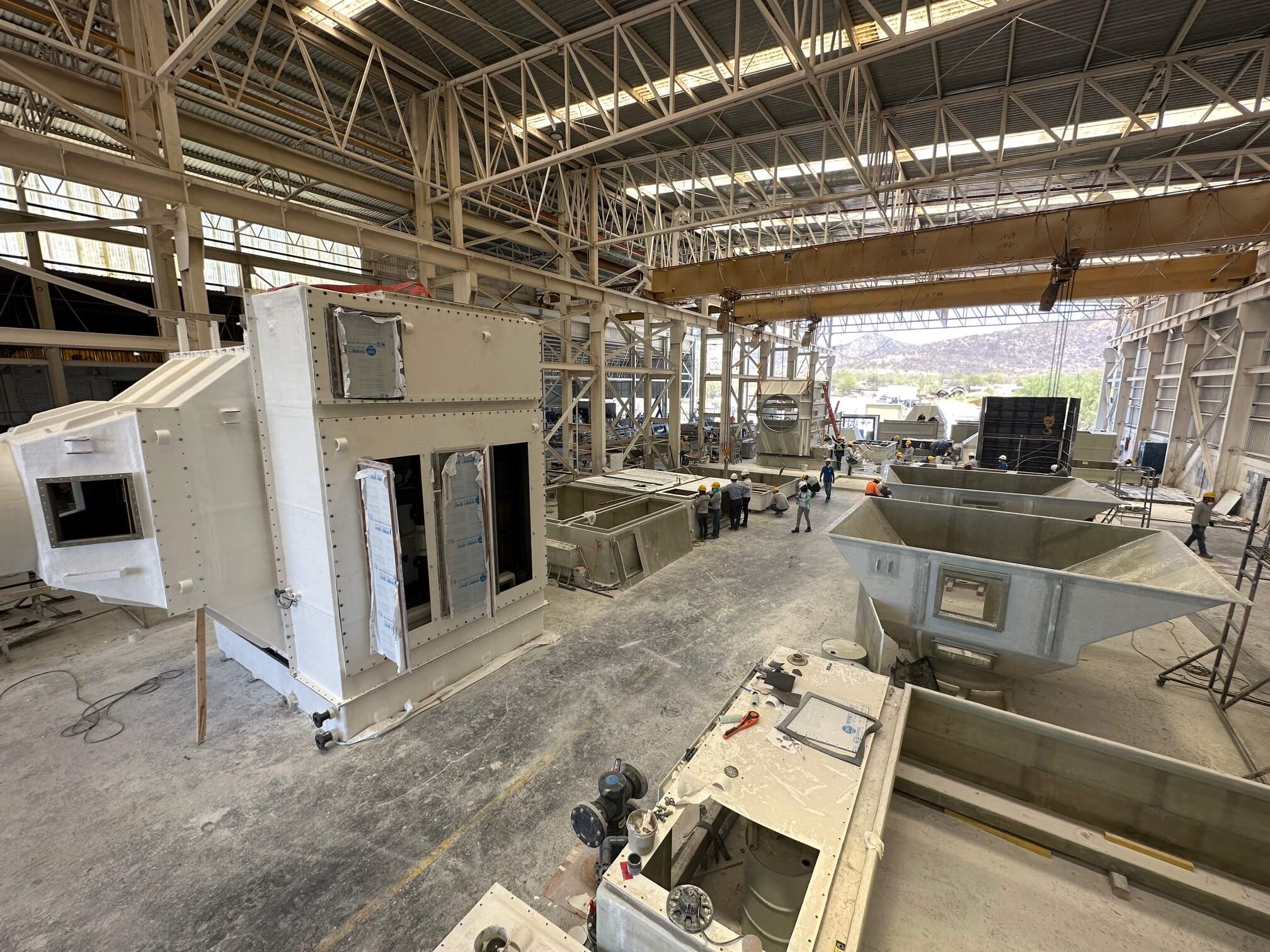
A buyer's guide to choosing the right resin system for FRP tanks and piping — resin families, chemical resistance testing, temperature limits, and what to specify before you order.
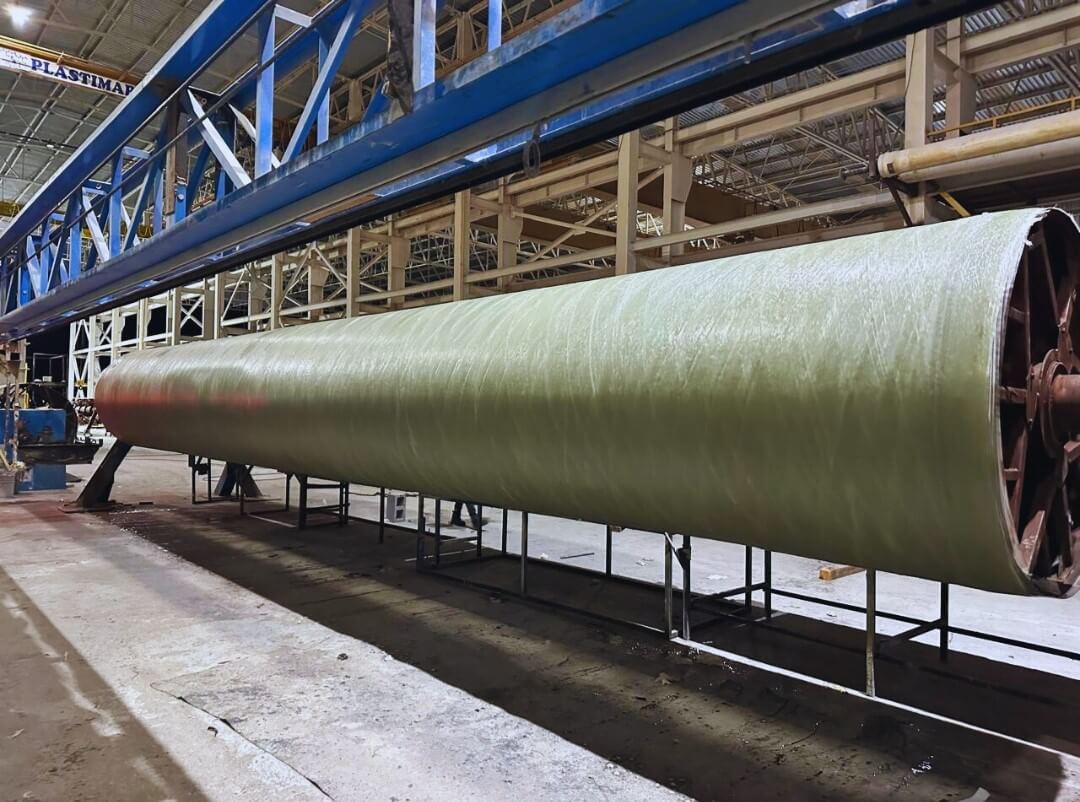
A buyer's guide to how FRP tanks are actually built — filament winding versus contact molding (hand lay-up) — and how each method affects structural performance, cost, and lead time.
Article Summary
A technical guide to FRP tanks for sulfuric acid storage, covering chemical properties, tank design considerations, ASTM standards, and industrial applications.
Need help with an FRP application?
Share your service conditions, chemical exposure, dimensions, or performance requirements and our team can help you evaluate the right FRP solution.
Request a Quote