

Galvanic Corrosion: Why FRP Breaks the Metal-to-Metal Chain
A buyer's guide to galvanic corrosion in mixed-metal plant structures — how the cell works, why coatings and isolation kits fail, and how FRP profiles, grating, and piping break the metal-to-metal path.
Galvanic Corrosion: Why FRP Breaks the Metal-to-Metal Chain
Walk any mining, chemical, or wastewater plant and you will find dissimilar metals bolted together: stainless steel piping resting on carbon steel supports, aluminum handrails fastened to steel posts, galvanized grating held down with stainless clips, copper-alloy instrument fittings threaded into steel bodies. Each of those joints is a potential galvanic cell. In a dry control room it may never matter. In a tank farm wetted by acid mist, condensate, or wash-down water, it is often where corrosion starts—and where it is hardest to see until a support fails or a bolt shears.
This guide explains how galvanic corrosion works, why it keeps returning in mixed-metal structures despite coatings and isolation kits, and how glass-fiber-reinforced plastic (FRP) structural profiles, gratings, pipe supports, and piping remove the problem at its source. It closes with what to put in your specification and the ASTM standards that apply.
Why It Matters
Galvanic attack is a maintenance problem disguised as a structural one. It concentrates at connections—bolt holes, clip points, saddle contacts, flange faces—which are exactly the locations that carry load and are hardest to inspect. The consequences for an owner include:
- Loss of section at the connection, not across the member, so a beam can look sound while its bolted end has thinned.
- Seized or failed fasteners that turn a routine maintenance task into cutting and re-drilling.
- Recurring coating repair at every joint, often requiring scaffolding, hot-work permits, and process downtime.
- Contamination of process streams or product by corrosion products in sensitive services.
For procurement, the cost is not the replacement bolt. It is the shutdown, the access, and the repeat cycle every few years.
How Galvanic Corrosion Works
A galvanic cell needs three conditions at the same time:
- Two dissimilar metals with different electrochemical potentials. The more active metal becomes the anode and corrodes; the more noble metal becomes the cathode and is protected.
- An electrolyte bridging both metals—rain, condensate, seawater spray, acid mist, process drips, or even humid air carrying dissolved salts.
- An electrical path between the metals, usually direct metal-to-metal contact through a bolt, clip, weld, or saddle.
Remove any one of the three and the cell cannot operate. That simple rule is the basis of every galvanic corrosion control strategy.
The area ratio effect
The rate of attack depends heavily on the relative exposed areas. A small anode connected to a large cathode concentrates the corrosion current on the small part. Carbon steel bolts holding a large stainless steel plate, or zinc-coated clips on a stainless structure, are classic examples: the fastener is consumed quickly while the noble metal around it looks pristine. The reverse arrangement—a large anode with a small cathode—corrodes more slowly, which is why corrosion engineers advise that if only one metal in a couple can be coated, coat the cathode, not the anode.
Why aggressive plant environments make it worse
Industrial electrolytes are far more conductive than clean rainwater. Chloride-laden coastal air, sulfate-rich mist around electrowinning and leaching circuits, and chemical splash in process areas all lower the resistance of the electrolyte film and raise the corrosion current. Crevices at bolted joints trap that electrolyte and keep it in place, so galvanic and crevice corrosion often act together at the same connection.
Why Conventional Fixes Keep Failing
Metal-on-metal designs try to break the electrical path or block the electrolyte. Both approaches work on day one and degrade over time:
- Coatings are damaged during erection, abraded by thermal movement and vibration, and broken at every bolt hole. A small holiday on a coated anode creates exactly the small-anode/large-cathode condition you were trying to avoid.
- Isolation kits (non-conductive gaskets, sleeves, and washers) are effective only if every fastener in the joint is isolated and stays isolated. A single missing sleeve or a crushed washer restores the metallic path.
- Sacrificial anodes are practical for submerged or buried assets, not for atmospheric structures and pipe racks.
- Upgrading to a more noble alloy moves the problem rather than removing it, because the upgraded member becomes a stronger cathode against whatever it still touches.
How FRP Removes the Problem at the Source
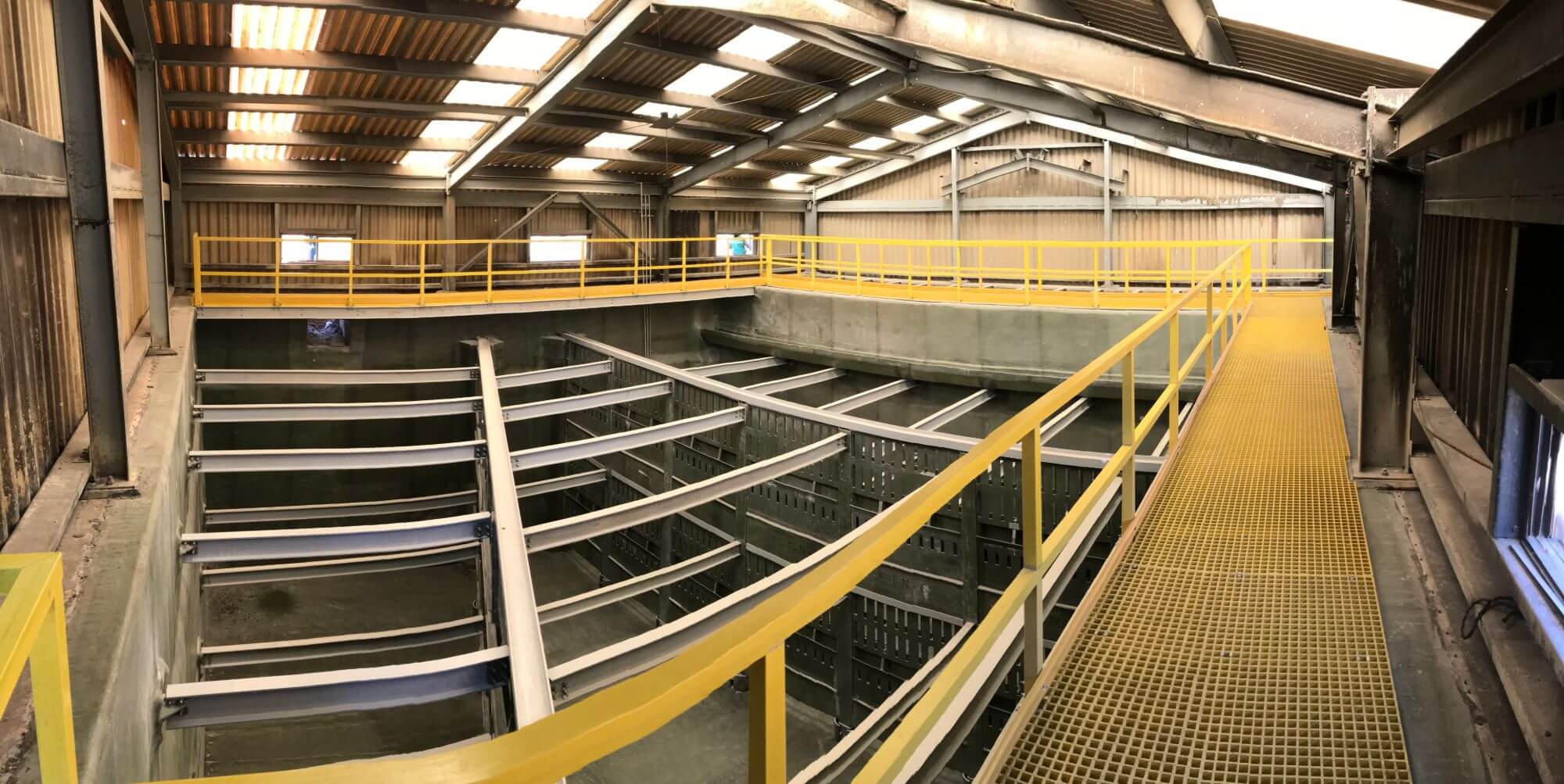
Glass-fiber-reinforced thermoset laminates are electrical insulators. They do not occupy a position on the galvanic series and cannot act as either anode or cathode. When an FRP member sits between two metals, it breaks the electrical path permanently—not through a gasket that can be lost, but through the bulk of the structure itself.
That property is useful in several product families:
- Pultruded structural profiles (I-beams, wide-flange beams, channels, angles, tubes) for pipe racks, equipment supports, and platforms that carry metallic piping or equipment.
- FRP grating and stair treads that eliminate the galvanized-grating-on-steel-frame couple and the clip corrosion that goes with it.
- FRP pipe supports, saddles, and hangers that isolate stainless or alloy piping from carbon steel racks.
- FRP piping and flanged spools that replace metallic runs entirely, removing dissimilar-metal transitions at valves and equipment nozzles.
Because the resin system is selected for the chemical environment, the same component that breaks the galvanic path also resists the electrolyte that would attack a metal. Isophthalic polyester resins are typically adequate for general atmospheric and wash-down exposure; vinyl ester resins are the usual choice where acid mist, chlorides, or chemical splash are present.
Design Considerations: Where Mixed Systems Still Need Attention
FRP solves the galvanic problem only if the details around it do not reintroduce a metallic path. These are the points we review on every mixed-material job:
- Fasteners. A metallic bolt that passes through an FRP member and touches two different metals still forms a couple. Use FRP fasteners where loads allow, or use hardware of the same metal as the part it contacts, with isolation where it bears on a different metal.
- Grating clips and hold-downs. Stainless clips on FRP grating are not a galvanic concern, but the same clip landing on a galvanized steel support is. Look at the full load path, not just the panel.
- Reinforcement type. Carbon fiber is electrically conductive and behaves as a noble material in contact with steel or aluminum. Specify glass-fiber reinforcement for components in contact with metals, or detail isolation if carbon reinforcement is required.
- Static and grounding. Because FRP does not conduct, metallic piping and equipment supported on FRP are no longer bonded through the structure. In flammable or classified areas, the designer must provide dedicated bonding and grounding paths, or specify a conductive laminate where static dissipation is required.
- UV exposure. Outdoor profiles and gratings need UV inhibitors and a surface veil to prevent fiber blooming over long exposure.
- Fire performance. State the flame-spread classification your governing code requires so the correct resin formulation is quoted.
- Stiffness. FRP has a lower modulus than steel, so spans are usually governed by deflection, not strength. Give the supplier the loads and allowable deflection, not just the steel section you are replacing.
What to Specify When Ordering
To get comparable quotes and avoid reintroducing galvanic couples at installation, include:
- A description of the environment: chemical species in the mist or splash, presence of chlorides, wet/dry cycling, and indoor or outdoor exposure.
- Resin system (isophthalic polyester or vinyl ester) and any fire-retardant requirement.
- Reinforcement type (glass fiber) and UV protection requirements for outdoor service.
- Design loads, spans, and allowable deflection for structural members and grating.
- Fastener and clip material, and isolation details at every FRP-to-metal or metal-to-metal interface.
- Dimensional tolerances for pultruded shapes per ASTM D3917 and a visual acceptance grade per ASTM D4385.
- For FRP pipe replacing metallic runs, the pipe classification per ASTM D2996 and flange drilling compatible with the mating metallic equipment.
- Bonding and grounding requirements where the structure supports metallic equipment in classified areas.
Applicable ASTM Standards
- ASTM D3917 — Dimensional tolerances for thermosetting glass-reinforced pultruded shapes: cross-section dimensions, straightness, twist, flatness, angularity, and camber of rods, bars, shapes, and flat sheet.
- ASTM D4385 — Classification of visual defects in pultruded products, with acceptance criteria by quality grade, used in contracts, drawings, and final inspection.
- ASTM D2996 — Filament-wound glass-fiber-reinforced thermosetting-resin pipe: classification, materials, dimensions, hydrostatic performance, and marking, for FRP piping that replaces metallic runs.
Our Experience
We have manufactured FRP exclusively for more than 40 years, across more than 2,600 projects in mining, chemical processing, and water and wastewater treatment. A recurring pattern in retrofit work is that the original corrosion failure was not in the tank or the pipe—it was at the support steel, the clips, and the bolted connections where two metals met in a wet environment. Replacing those supports, racks, and walkways with FRP, and detailing the fasteners correctly, removes the failure point instead of re-coating it every few years.
Final Thoughts
Galvanic corrosion needs two metals, an electrolyte, and an electrical path. In industrial plants you rarely control the electrolyte, and coatings and isolation kits only interrupt the path until they are damaged. FRP profiles, grating, supports, and piping break the path through the structure itself, while the resin system resists the chemistry that drives the attack. The remaining work is in the details: fasteners, reinforcement type, grounding, and a specification that references the right ASTM standards.
If your plant has supports, racks, or walkways corroding at the connections, contact Arizona FRP Supply. Send us the environment, loads, and the existing layout, and we will help you define an FRP replacement that eliminates the dissimilar-metal joints.
References
ASTM International. (2023). Standard specification for dimensional tolerance of thermosetting glass-reinforced plastic pultruded shapes (ASTM D3917-23). ASTM International.
ASTM International. (2019). Standard practice for classifying visual defects in thermosetting reinforced plastic pultruded products (ASTM D4385-19). ASTM International.
ASTM International. (2023). Standard specification for filament-wound "fiberglass" (glass-fiber-reinforced thermosetting-resin) pipe (ASTM D2996-23). ASTM International.
Explore Related FRP Products
-
FRP Tanks
Custom FRP tanks for chemical storage, wastewater treatment and industrial fluid handling. -
FRP Pipes
Corrosion-resistant FRP pipes for industrial piping systems.
Related Articles
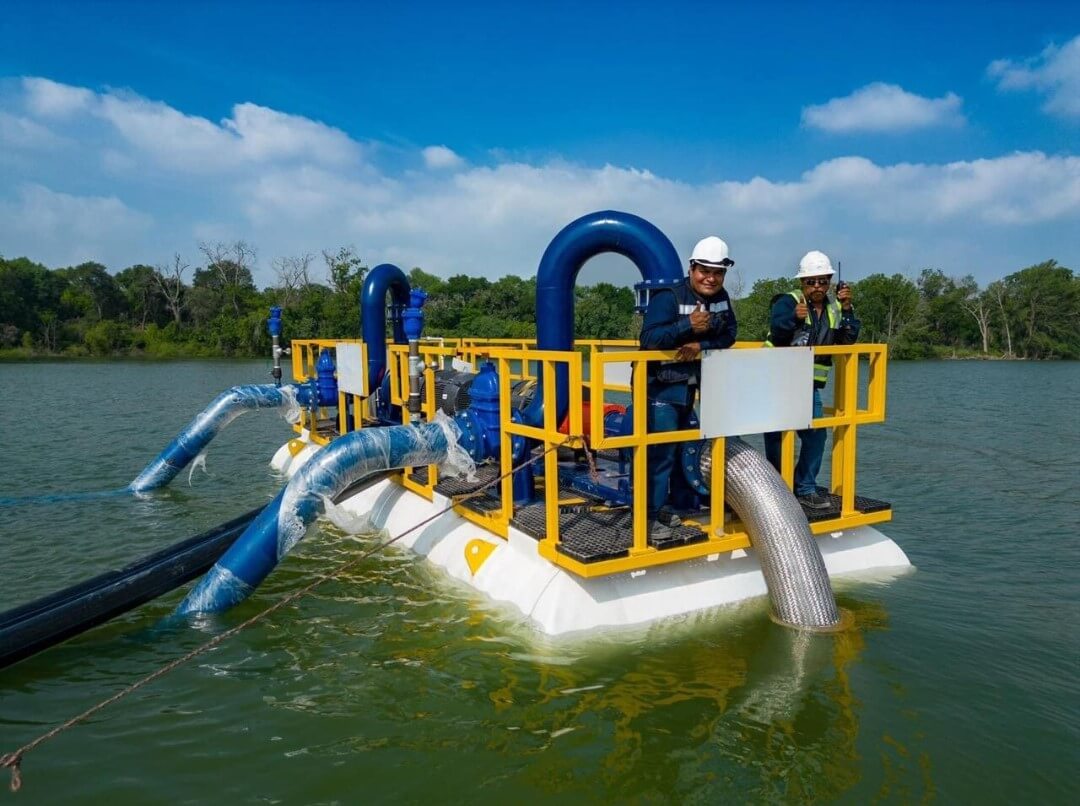
A buyer's guide to specifying FRP platforms, walkways, and structural profiles for coastal and marine service — chloride attack, resin selection, hardware, and the ASTM standards to reference.
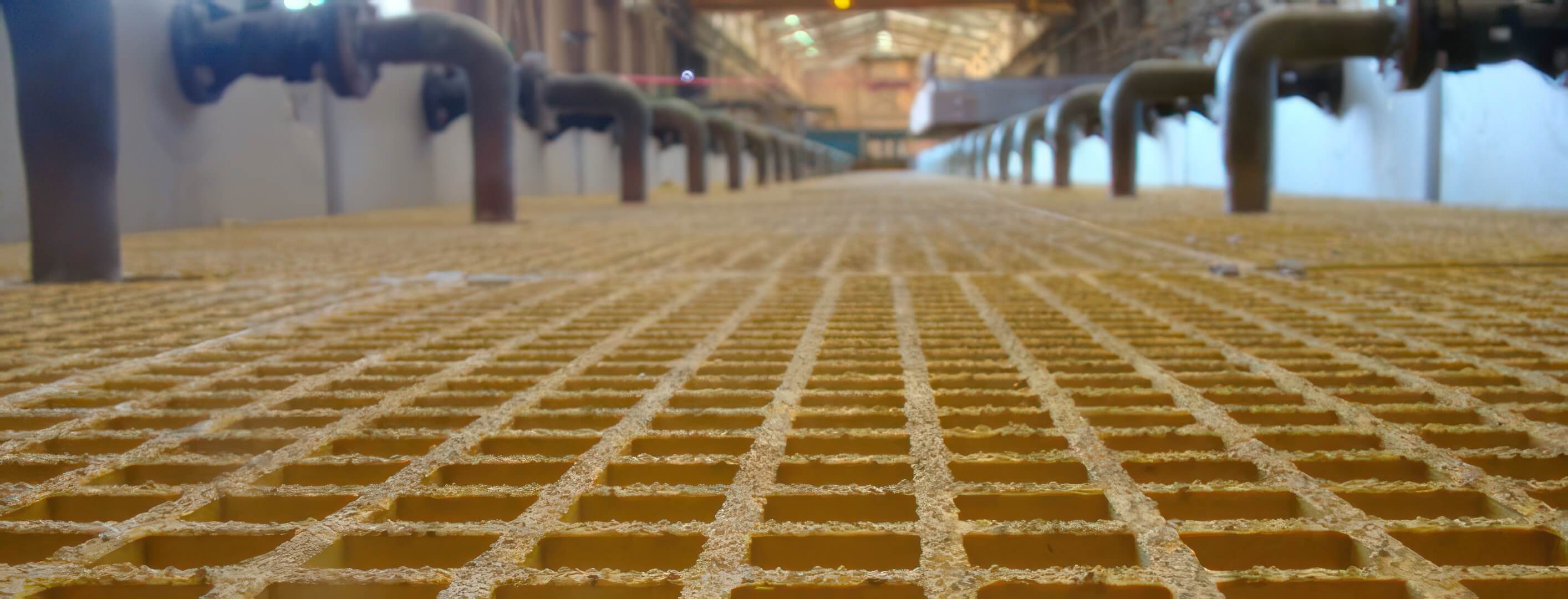
A buyer's comparison of FRP and galvanized steel gratings for corrosive plant environments — corrosion behavior, weight, maintenance, and what to specify before you order.
Article Summary
A buyer's guide to galvanic corrosion in mixed-metal plant structures — how the cell works, why coatings and isolation kits fail, and how FRP profiles, grating, and piping break the metal-to-metal path.
Need help with an FRP application?
Share your service conditions, chemical exposure, dimensions, or performance requirements and our team can help you evaluate the right FRP solution.
Request a Quote