

FRP vs Stainless Steel Tanks for Chemical Storage: Which One Is Better?
Compare FRP and stainless steel tanks for chemical storage. Learn which material offers better corrosion resistance, lower maintenance, and long-term cost efficiency.
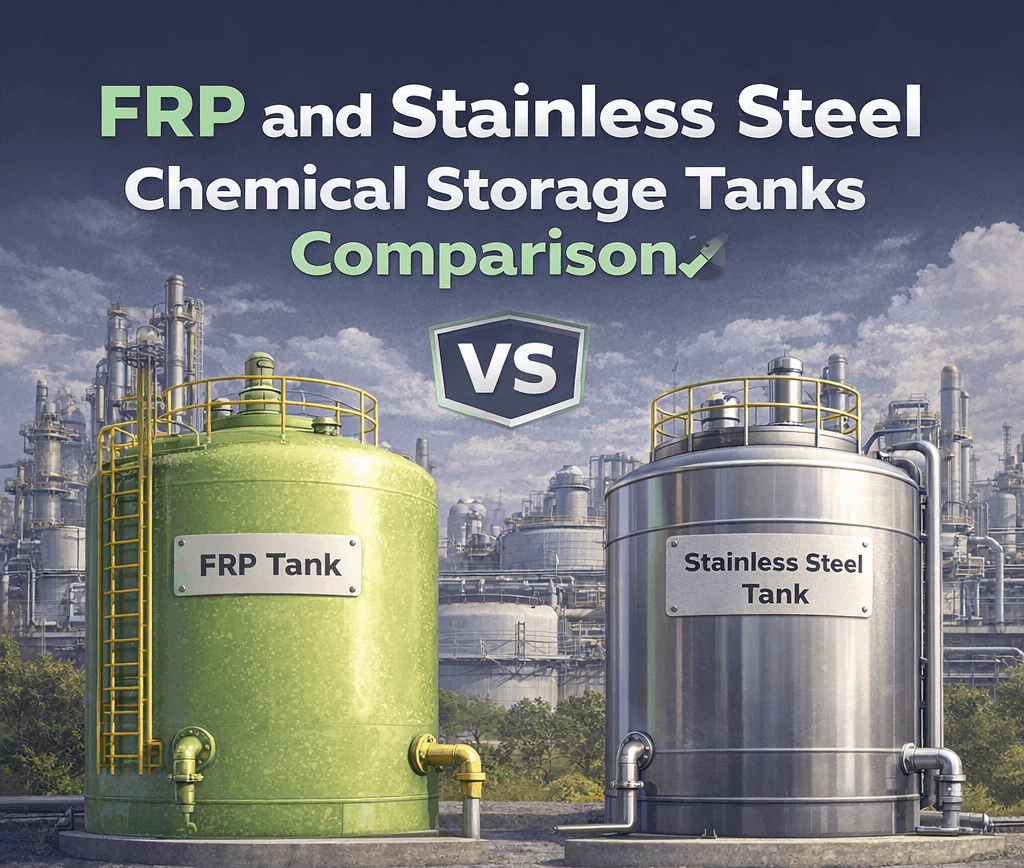
FRP vs Stainless Steel Tanks for Chemical Storage: Which One Is Better?
Choosing the right material for chemical storage tanks is critical for safety, performance, and long-term cost control. Two of the most common options are fiberglass reinforced plastic (FRP) and stainless steel. While stainless steel is widely recognized across industrial applications, FRP is often the better solution for corrosive chemical environments where long-term resistance and lower maintenance matter most.
Corrosion Resistance
Corrosion resistance is one of the main reasons engineers and facility managers choose FRP tanks.
- FRP offers excellent resistance to a wide range of acids, alkalis, and corrosive chemicals when the correct resin system is selected and validated per ASTM C581.
- Stainless steel performs well in many environments but can be vulnerable to chloride-induced stress corrosion cracking and aggressive chemical attack over time.
In corrosive service, FRP engineered to ASTM D3299 or ASTM D4097 often provides a more reliable long-term solution with less risk of material degradation.
Cost Comparison
Material selection should not be based on purchase price alone. Total cost of ownership matters more.
- FRP often provides better long-term value because it requires less maintenance in harsh chemical service.
- Stainless steel typically carries a higher upfront cost and may generate additional costs if corrosion, repairs, or early replacement become necessary.
For many chemical storage applications, FRP can reduce lifecycle cost significantly compared to metallic alternatives.
Durability and Service Life
Both materials can be durable, but performance depends heavily on the operating environment.
- FRP tanks engineered to ASTM D3299 (filament wound) or ASTM D4097 (contact molded) can deliver excellent service life when properly specified for the stored chemical, temperature, and operating conditions.
- Stainless steel tanks can last a long time in suitable service, but their lifespan may decrease significantly in highly corrosive or chloride-rich environments.
The advantage of FRP is that the resin system can be selected and tested specifically for the application using ASTM C581, rather than relying on general material resistance alone.
Weight and Installation
Installation requirements also affect total project cost and complexity.
- FRP is significantly lighter than stainless steel, making transportation and field installation easier and less expensive.
- Stainless steel is heavier and may require additional structural support, more handling equipment, and higher installation costs.
This makes FRP especially attractive for projects where weight savings and installation efficiency are priorities.
Customization and Design Flexibility
FRP tanks offer strong flexibility for custom industrial applications. Typical options include:
- Vertical or horizontal tank configurations
- Custom diameters and capacities
- Resin systems selected and validated for specific chemicals per ASTM C581
- Corrosion-resistant internal liners
- UV-resistant exterior finishes
- Integrated fittings, access manholes, ladders, and platforms
Stainless steel can also be customized, but fabrication costs typically rise faster as requirements become more specialized.
When FRP Is the Better Choice
FRP is generally the better option when:
- The stored chemical is highly corrosive or contains chlorides
- Long-term maintenance reduction is a priority
- A custom tank configuration is required
- The tank will operate in harsh industrial or outdoor environments
When Stainless Steel May Still Be Appropriate
Stainless steel may remain a suitable choice for:
- Sanitary, food-grade, or pharmaceutical applications
- Higher-temperature services that exceed FRP design limits
- Storage of non-corrosive or mildly corrosive fluids
Our Experience
With over 40 years of exclusive FRP manufacturing experience, Arizona FRP Supply has supplied custom chemical storage tanks to large-scale mining, chemical, and industrial operations across North America. With more than 2,600 projects completed, every tank we manufacture is custom-engineered to ASTM standards and built to the specific chemical, concentration, and operating conditions of the application — not off a shelf.
Final Thoughts
For many industrial chemical storage applications, FRP tanks offer better corrosion resistance, lower long-term maintenance, and greater design flexibility than stainless steel. The right choice depends on the specific chemical, concentration, temperature, and operating environment. Material selection should always be based on actual service conditions and validated engineering standards.
References
ASTM International. (2022). ASTM D3299: Standard specification for filament-wound glass-fiber-reinforced thermoset resin chemical-resistant tanks. ASTM International. https://www.astm.org/d3299-22.html
ASTM International. (2021). ASTM D4097: Standard specification for contact-molded glass-fiber-reinforced thermoset resin chemical-resistant tanks. ASTM International. https://www.astm.org/d4097-21.html
ASTM International. (2019). ASTM C581: Standard practice for determining chemical resistance of thermosetting resins used in glass-fiber-reinforced structures intended for liquid service. ASTM International. https://www.astm.org/c0581-03r19.html
Explore Related FRP Products
-
FRP Tanks
Custom FRP tanks for chemical storage, wastewater treatment and industrial fluid handling. -
FRP Pipes
Corrosion-resistant FRP pipes for industrial piping systems.
Related Articles

A buyer's guide to inspecting FRP tanks in corrosive service — external and internal checks, Barcol hardness baselines, inspection intervals, and the ASTM standards that define acceptance criteria.
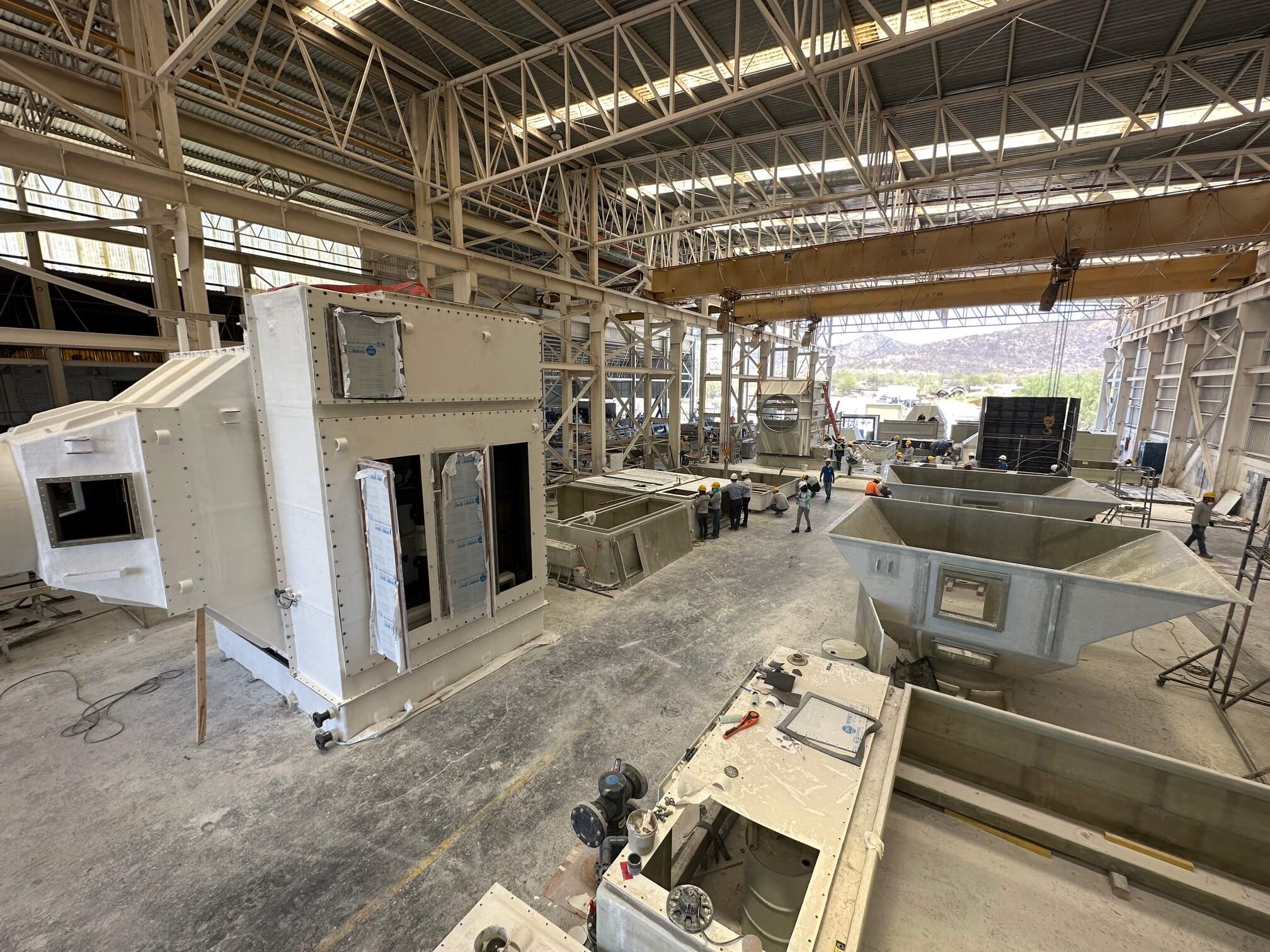
A buyer's guide to choosing the right resin system for FRP tanks and piping — resin families, chemical resistance testing, temperature limits, and what to specify before you order.
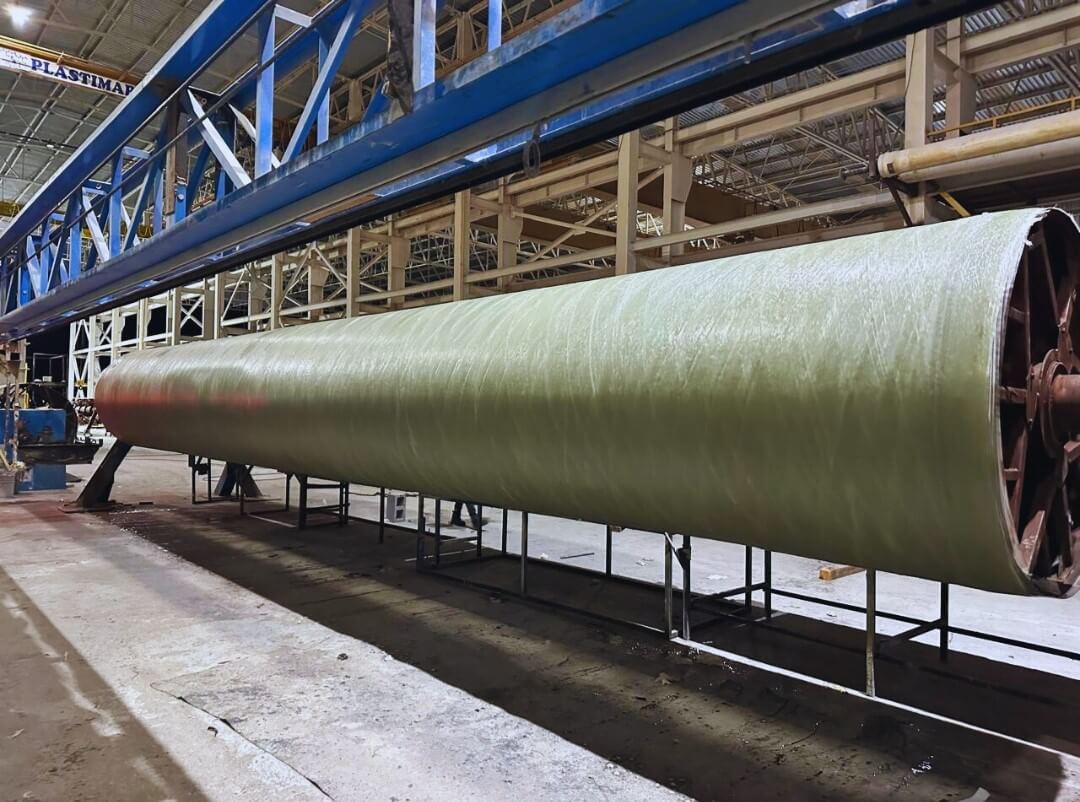
A buyer's guide to how FRP tanks are actually built — filament winding versus contact molding (hand lay-up) — and how each method affects structural performance, cost, and lead time.
Article Summary
Compare FRP and stainless steel tanks for chemical storage. Learn which material offers better corrosion resistance, lower maintenance, and long-term cost efficiency.
Need help with an FRP application?
Share your service conditions, chemical exposure, dimensions, or performance requirements and our team can help you evaluate the right FRP solution.
Request a Quote