

FRP Tanks and Pipes with Fluoropolymer Liner: High-Temperature Corrosion Resistance for Demanding Chemical Service
A technical guide to FRP tanks and piping systems lined with fluoropolymers (PVDF, ECTFE, FEP, PFA) for high-temperature corrosive chemical service in mining and chemical processing.
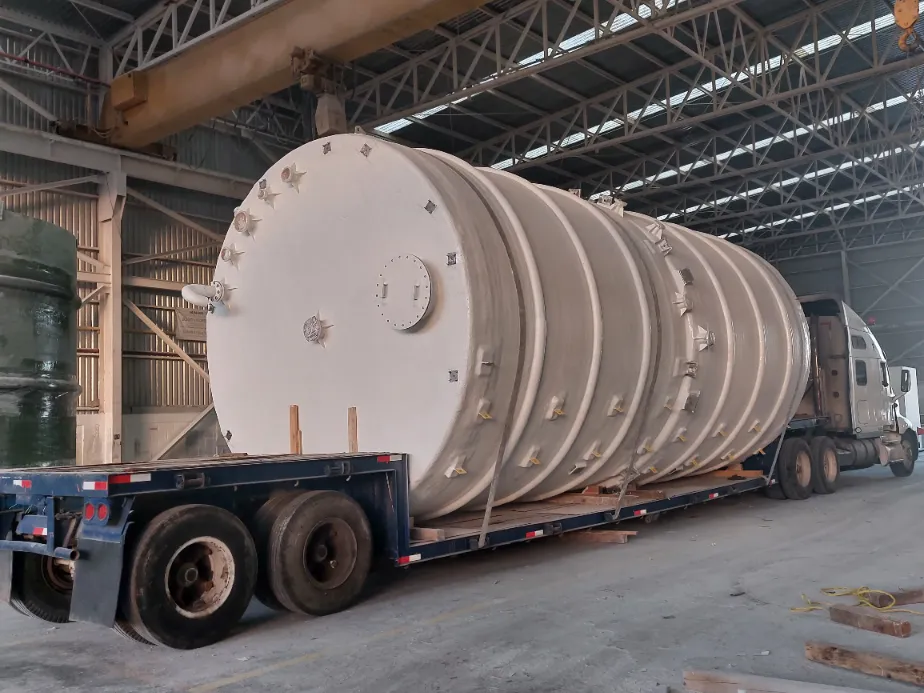
FRP Tanks and Pipes with Fluoropolymer Liner: High-Temperature Corrosion Resistance for Demanding Chemical Service
In chemical and mining operations where aggressive chemicals meet elevated temperatures, standard corrosion-resistant materials often reach their limits. FRP tanks and piping systems lined with fluoropolymers combine the structural strength of fiberglass reinforced plastic with the exceptional chemical inertness of fluoropolymer resins — delivering a solution that performs where conventional materials fail. Arizona FRP Supply has been engineering and supplying fluoropolymer-lined FRP systems for over 20 years, serving mining and chemical processing operations across North America.
What Is a Fluoropolymer Liner?
A fluoropolymer liner is a chemically inert inner layer bonded to the interior surface of an FRP tank or pipe. It acts as the primary barrier between the stored or conveyed chemical and the FRP structural laminate. Fluoropolymers are a family of high-performance thermoplastic resins characterized by extremely low surface energy, broad chemical resistance, and thermal stability across a wide service temperature range.
The fluoropolymers used in industrial FRP lining applications, ranked from highest to lowest chemical resistance, include:
- PFA (Perfluoroalkoxy Alkane) — highest thermal and chemical performance; operating range -310°F to 500°F (-190°C to 260°C); preferred for the most demanding high-temperature applications
- MFA (Modified Fluoroalkoxy Copolymer) — performance similar to PFA; operating range -310°F to 482°F (-190°C to 250°C)
- FEP (Fluorinated Ethylene Propylene) — near-universal chemical resistance with excellent permeation resistance; operating range -310°F to 401°F (-190°C to 205°C)
- ETFE (Ethylene Tetrafluoroethylene) — excellent resistance to strong acids and solvents with good mechanical strength; operating range -310°F to 311°F (-190°C to 155°C)
- ECTFE (Ethylene Chlorotrifluoroethylene) — outstanding resistance to strong acids, bases, and solvents; operating range -105°F to 320°F (-76°C to 160°C)
- PVDF (Polyvinylidene Fluoride) — excellent resistance to chlorinated solvents, acids, and oxidizing agents; operating range -40°F to 284°F (-40°C to 140°C)
- PVDF-Flex — flexible grade PVDF for piping applications requiring thermal cycling resistance; operating range -22°F to 248°F (-30°C to 120°C)
Why Combine Fluoropolymer with FRP?
FRP alone provides excellent corrosion resistance for a wide range of chemicals. However, at elevated temperatures or in the presence of highly aggressive chemicals — such as concentrated hydrochloric acid, hydrofluoric acid, chlorine, or strong oxidizers — standard FRP resin systems may experience accelerated degradation or permeation over time. Fluoropolymer liners solve this by providing a chemically inert barrier that protects the structural FRP laminate from direct chemical contact.
- Mechanical strength, lightweight design, and fabrication flexibility of FRP
- Near-universal chemical resistance and thermal stability of fluoropolymers
- Longer service life compared to either material used independently in aggressive service
- Lower total cost of ownership compared to exotic metal alloys
High-Temperature Performance
Temperature is one of the most critical variables in chemical storage and piping system design. As temperature increases, the corrosive effect of most chemicals intensifies — and the resistance of standard resin systems decreases. Fluoropolymer liners extend the operating envelope of FRP systems significantly beyond what standard vinyl ester or isophthalic resin systems can achieve:
- Standard vinyl ester FRP systems are typically rated for continuous service up to 180–200°F (82–93°C) depending on the chemical
- PVDF-lined FRP systems extend reliable service to 284°F (140°C)
- ECTFE-lined systems perform reliably up to 320°F (160°C)
- ETFE-lined systems are rated for service up to 311°F (155°C)
- FEP-lined systems extend performance to 401°F (205°C)
- MFA and PFA-lined systems cover the most extreme high-temperature applications, up to 482°F (250°C) and 500°F (260°C) respectively
This broad performance range makes fluoropolymer-lined FRP the preferred solution for high-temperature acid storage, heated chemical process piping, and reactor feed systems in mining and chemical processing plants.
Industrial Applications in Mining and Chemical Processing
Fluoropolymer-lined FRP tanks and piping systems are used where chemical aggressiveness and elevated temperature combine to eliminate conventional material options:
- Storage and transfer of concentrated hydrochloric acid (HCl) at elevated temperatures
- Hydrofluoric acid (HF) containment in mineral processing operations
- Chlorine and sodium hypochlorite storage and distribution systems
- Heated sulfuric acid service in leach circuits and electrowinning operations
- High-temperature process piping in acid recovery and regeneration systems
- Aggressive solvent and oxidizer storage in chemical manufacturing
Design and Fabrication Considerations
Fluoropolymer-lined FRP systems require precise engineering and fabrication to ensure liner integrity and long-term performance. Key design considerations include:
- Liner selection based on chemical compatibility, operating temperature range, and permeation resistance requirements
- Proper bonding or mechanical anchoring of the fluoropolymer liner to the FRP structural shell to prevent liner collapse or delamination
- Thermal expansion differential management between the fluoropolymer liner and the FRP laminate
- Spark testing and holiday detection of the liner prior to commissioning to verify barrier integrity
- Fitting and nozzle design to maintain liner continuity at all penetrations
Applicable ASTM Standards
The design, fabrication, and testing of fluoropolymer-lined FRP systems are governed by established industry standards:
- ASTM D3299 — filament-wound FRP chemical-resistant tanks
- ASTM D4097 — contact-molded FRP chemical-resistant tanks
- ASTM C581 — chemical resistance evaluation of thermosetting resin laminates in liquid service
- ASTM D543 — standard practices for evaluating the resistance of plastics to chemical reagents
Our Experience
Arizona FRP Supply has been engineering and supplying fluoropolymer-lined FRP tanks and piping systems for over 20 years. Our experience spans mining and chemical processing operations across North America, where we have delivered custom-engineered solutions for the most demanding high-temperature and high-corrosivity service conditions. Every system is specified and fabricated to ASTM standards, with liner selection validated for the specific chemical, concentration, and operating temperature of each application.
Final Thoughts
When chemical aggressiveness and elevated temperatures push standard FRP systems beyond their design limits, fluoropolymer-lined FRP tanks and piping offer a proven, cost-effective alternative to exotic metal alloys. The combination of structural FRP and a chemically inert fluoropolymer barrier delivers long service life, low maintenance, and reliable performance in some of the harshest industrial environments. Proper material selection, liner specification, and fabrication quality are the keys to maximizing system performance and service life.
References
ASTM International. (2022). ASTM D3299: Standard specification for filament-wound glass-fiber-reinforced thermoset resin chemical-resistant tanks. ASTM International. https://www.astm.org/d3299-22.html
ASTM International. (2019). ASTM C581: Standard practice for determining chemical resistance of thermosetting resins used in glass-fiber-reinforced structures intended for liquid service. ASTM International. https://www.astm.org/c0581-03r19.html
ASTM International. (2021). ASTM D543: Standard practices for evaluating the resistance of plastics to chemical reagents. ASTM International. https://www.astm.org/d0543-14r21.html
Explore Related FRP Products
-
FRP Tanks
Custom FRP tanks for chemical storage, wastewater treatment and industrial fluid handling. -
FRP Pipes
Corrosion-resistant FRP pipes for industrial piping systems. -
FRP Flanges, Elbows & Tees
FRP flanges, elbows, tees and fittings for corrosion-resistant piping systems.
Related Articles
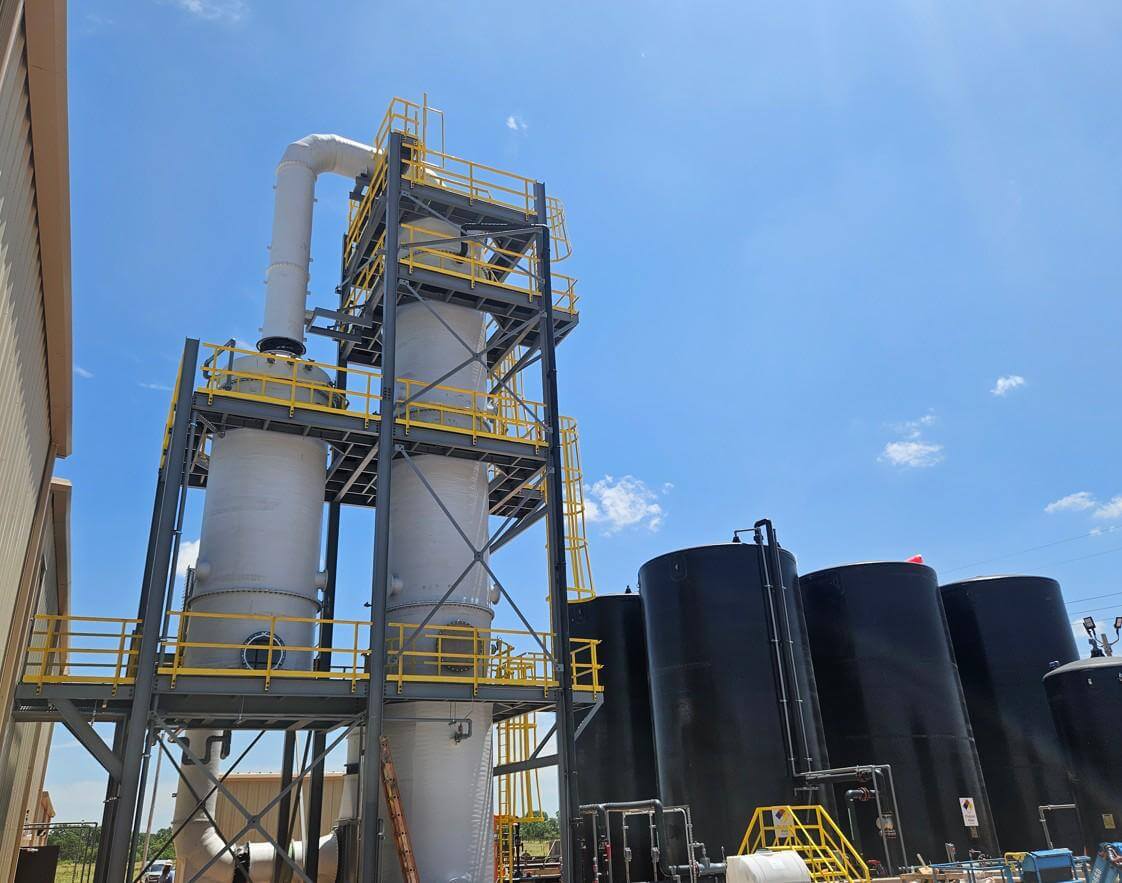
A buyer's guide to specifying FRP scrubbers and ductwork for acid fume control — condensate chemistry, resin and liner selection, the vacuum design case, and the ASTM standards to reference.
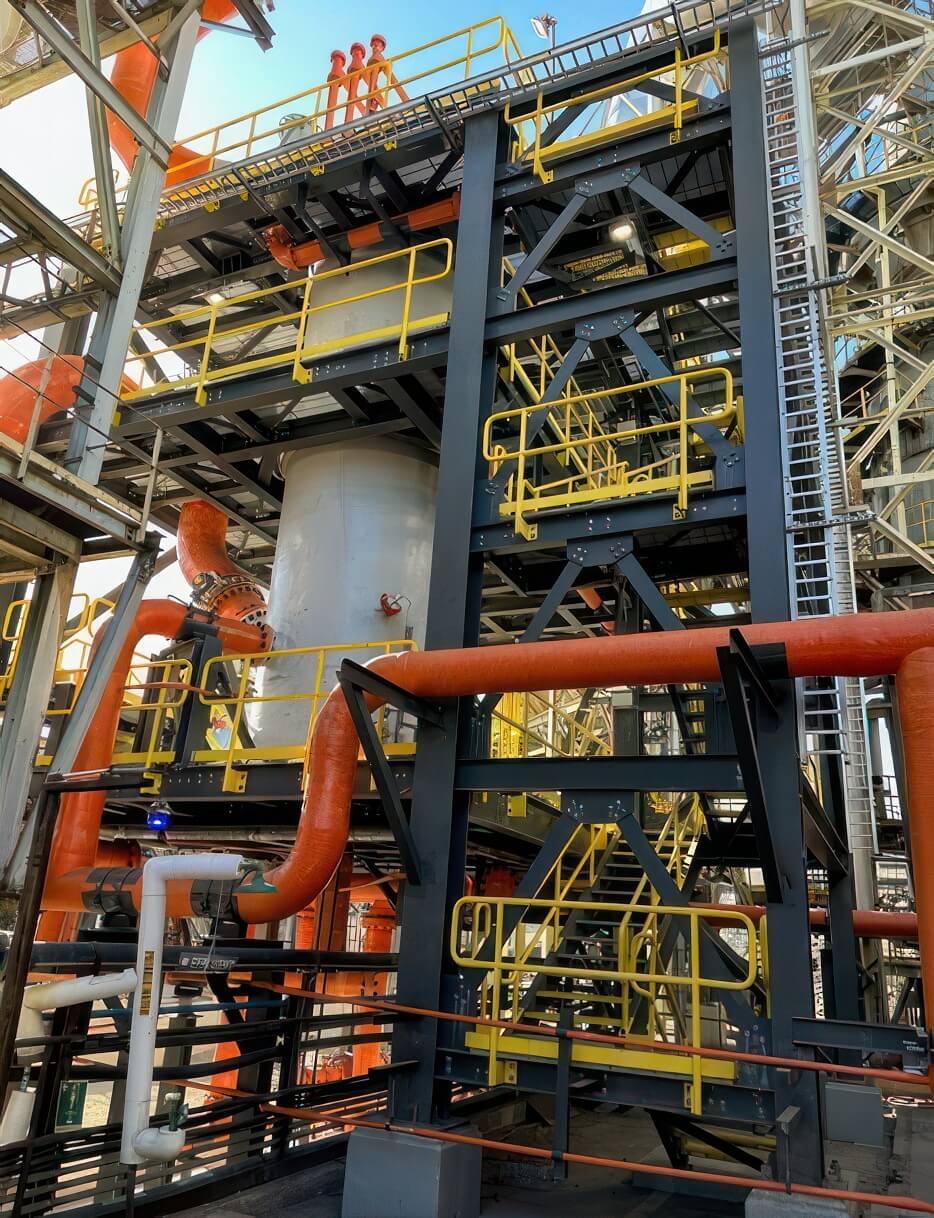
A buyer's guide to specifying FRP piping for corrosive chemical service — how pressure ratings are actually derived, corrosion barrier and resin selection, joining methods, thermal movement, and the ASTM standards to reference.
Article Summary
A technical guide to FRP tanks and piping systems lined with fluoropolymers (PVDF, ECTFE, FEP, PFA) for high-temperature corrosive chemical service in mining and chemical processing.
Need help with an FRP application?
Share your service conditions, chemical exposure, dimensions, or performance requirements and our team can help you evaluate the right FRP solution.
Request a Quote